

Reviewed and updated: October 4, 2026
The practical answer
A gentle cleanser is the base. Salicylic acid or benzoyl peroxide may help some acne patterns, but irritation increases when several active products are stacked. Persistent or scarring acne needs dermatology care.
Separate cosmetic benefits from treatment claims
A grooming product may cleanse, condition, reduce surface oil, or improve appearance. It should not be presented as a cure or guaranteed growth treatment. Read the active ingredients and directions rather than relying on the front label.
A gentle cleanser is the base. Salicylic acid or benzoyl peroxide may help some acne patterns, but irritation increases when several active products are stacked. Persistent or scarring acne needs dermatology care.
Introduce one change at a time
Patch test when appropriate and begin at the label frequency. Stacking strong cleansers, acids, fragrance, essential oils, or medicated products makes irritation harder to identify.
A gentle cleanser is the base. Salicylic acid or benzoyl peroxide may help some acne patterns, but irritation increases when several active products are stacked. Persistent or scarring acne needs dermatology care.
Protect the skin barrier
Use lukewarm water, rinse thoroughly, pat dry, and moisturize when needed. Burning, swelling, blistering, spreading rash, or worsening scale is a reason to stop.
A gentle cleanser is the base. Salicylic acid or benzoyl peroxide may help some acne patterns, but irritation increases when several active products are stacked. Persistent or scarring acne needs dermatology care.
Know when self-care is not enough
Persistent, painful, scarring, infected, sudden, or unexplained symptoms deserve qualified medical assessment. Bring the product list and photos of changes to the visit.
A gentle cleanser is the base. Salicylic acid or benzoyl peroxide may help some acne patterns, but irritation increases when several active products are stacked. Persistent or scarring acne needs dermatology care.
Four checks before choosing
- Exact identity
Match the full model or formula, size, seller, and current directions. - Comfort and fit
Choose the least aggressive option that reliably performs the intended job. - Upkeep
Confirm cleaning, replacement parts, storage, and ongoing cost. - Support
Prefer clear warranty, returns, contact information, and realistic claims.
How to test it without overdoing it
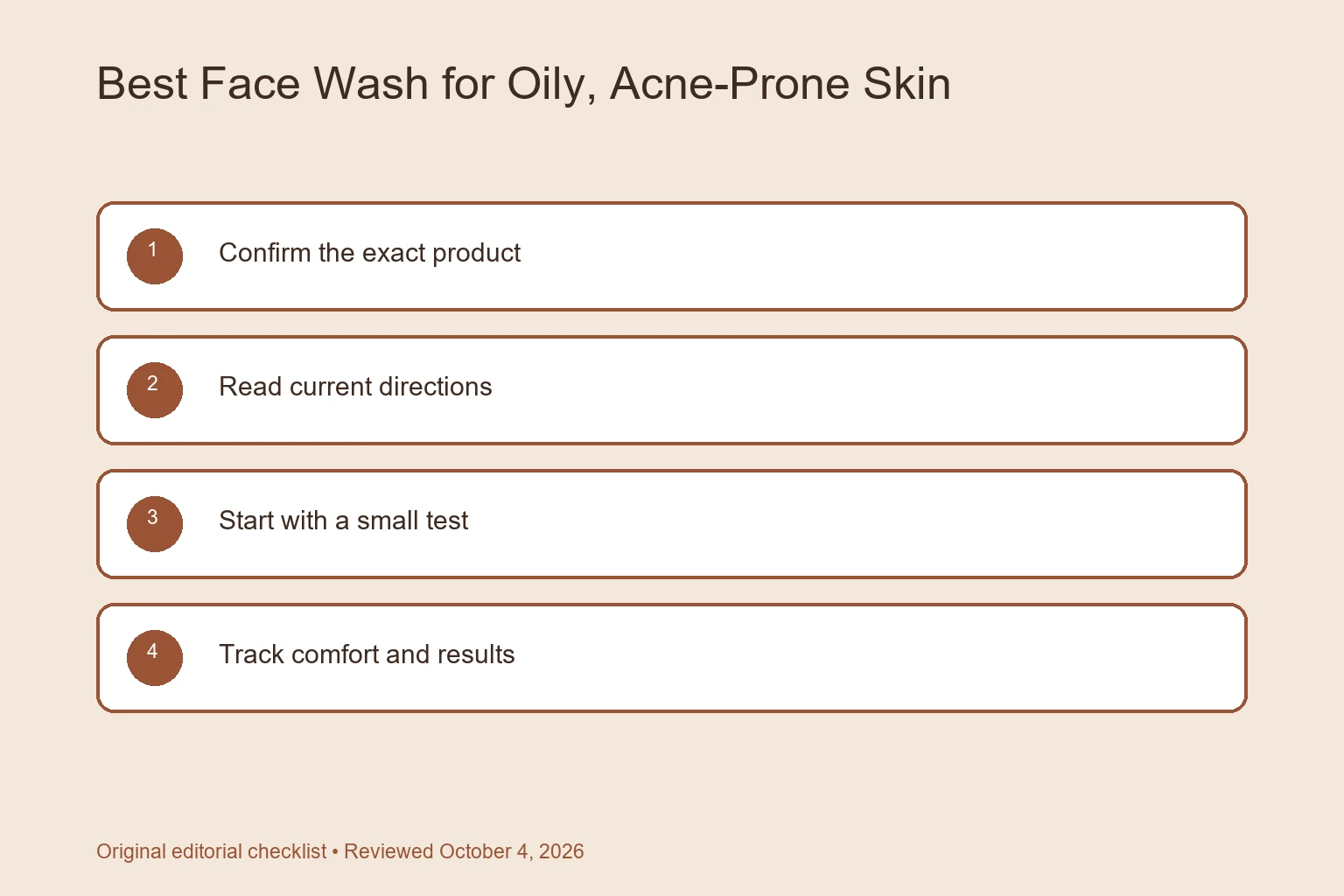
Begin with the smallest practical amount, lowest setting, longest guard, or gentlest technique. Test one change at a time and give the result enough time to judge delayed irritation, buildup, or wear. Stop when comfort declines rather than correcting the same area repeatedly.
Keep the packaging or model information until the product has proved suitable. Record the setting, amount, replacement part, and cleaning method that worked so the routine can be repeated instead of reinvented.
Safety and individual differences
A gentle cleanser is the base. Salicylic acid or benzoyl peroxide may help some acne patterns, but irritation increases when several active products are stacked. Persistent or scarring acne needs dermatology care. Personal health, skin sensitivity, hair pattern, household setup, age, medication, and professional requirements can change the safest choice. Follow the current instructions and seek qualified help for persistent, severe, sudden, or unexplained problems.
A practical choice for your routine
Face Wash for Oily, Acne-Prone Skin
We’d begin with a gentle cleanser that fits your existing skin-care routine.
As an Amazon Associate, this site earns from qualifying purchases.
Frequently asked questions
Is the highest-rated option automatically best?
No. Ratings can combine different versions and priorities. Fit, instructions, support, comfort, and the exact intended use matter more.
Should I choose the strongest setting or formula?
Use the lowest intensity that accomplishes the job. More force, heat, fragrance, active ingredient, or cutting exposure can increase irritation or risk.
How long should I test it?
Judge immediate control and comfort, then watch for delayed irritation, residue, maintenance burden, and replacement cost over several uses.
When should I stop?
Stop for pain, bleeding, burning, swelling, numbness, a spreading reaction, damaged equipment, or results that worsen with continued use.
Keep the decision current
Inspect the product before every use and retire it when wear changes comfort, hygiene, fit, temperature, alignment, or control. Do not extend useful life through improvised electrical, blade, structural, or chemical modifications.
The most dependable routine is easy to understand, affordable to maintain, and conservative enough to repeat. Keep notes on what worked and review them before buying a replacement.
Sources and review notes
This guide provides general education and does not replace medical, dental, plumbing, electrical, or professional advice.