

Reviewed and updated: October 1, 2026
Facial eczema can leave the cheeks, eyelids, jawline, or skin beneath a beard dry, itchy, inflamed, or flaky. Those symptoms can resemble contact dermatitis, seborrheic dermatitis, psoriasis, a fungal infection, or irritation from shaving. That is why a stubborn or unfamiliar facial rash deserves a medical diagnosis instead of a more aggressive grooming routine.
Eczema is usually managed rather than permanently “removed.” A practical routine focuses on protecting the skin barrier, reducing exposure to personal triggers, and using treatment recommended for the delicate facial area. The steps below are general education and do not replace care from a dermatologist or other clinician.
Start with a simpler routine
When skin is reacting, more products create more chances for irritation. Pause new fragrances, beard oils, aftershaves, scrubs, acids, retinoids, and essential oils until you understand what is happening. Wash with lukewarm water and a mild fragrance-free cleanser. Keep showers short and warm rather than long and hot, then pat the face dry instead of rubbing it.
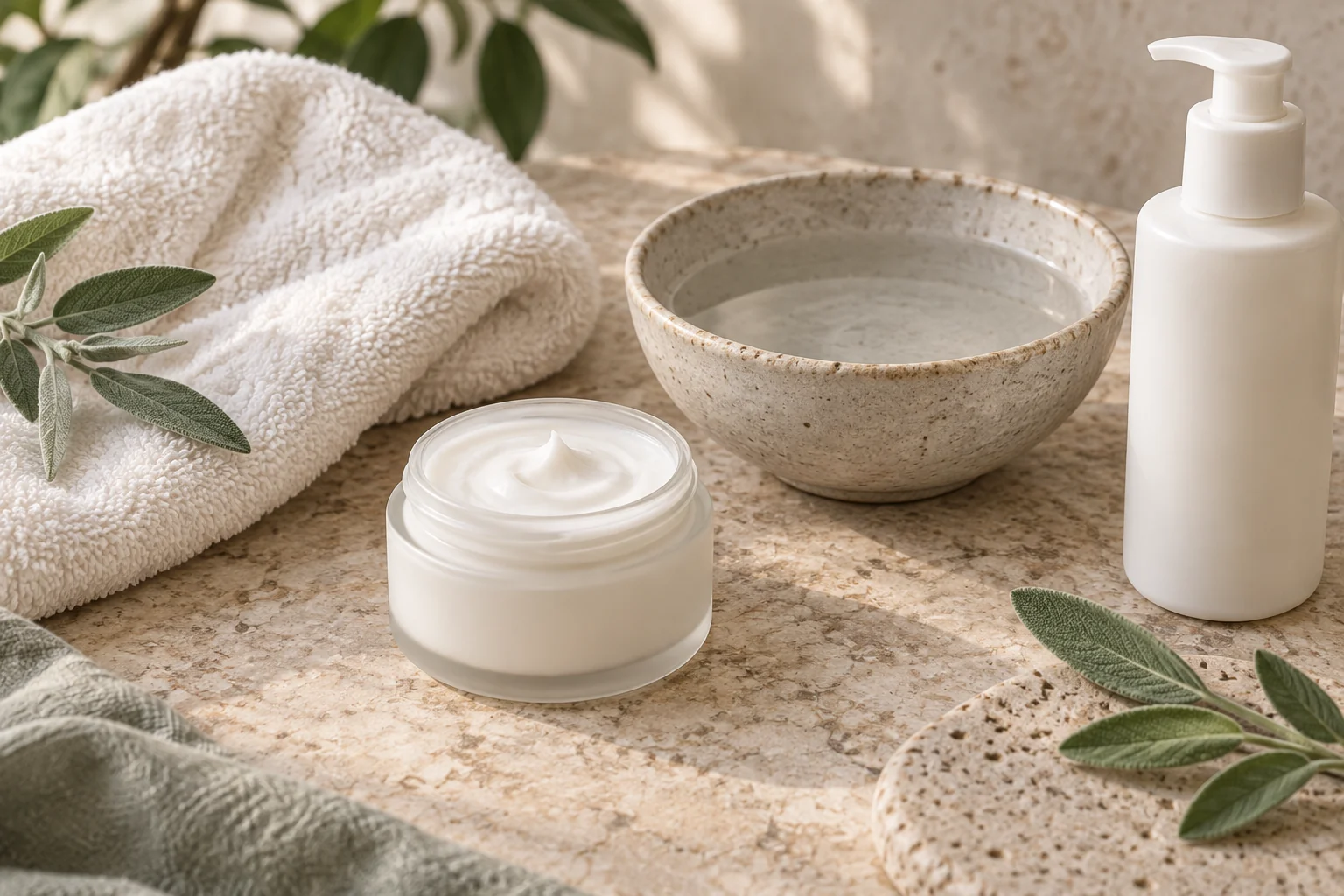
Apply a fragrance-free cream or ointment while the skin is still slightly damp. The American Academy of Dermatology notes that creams and ointments generally provide a stronger barrier than thin lotions. “Unscented” is not the same as fragrance-free; a product may use masking fragrance while carrying an unscented label. Check the ingredient list and patch-test a new product on a small unaffected area before putting it across the face.
Moisturize consistently
Moisturizer is most useful when it becomes routine rather than an emergency step. MedlinePlus recommends applying moisturizer two or three times a day and choosing products without fragrance, dye, or alcohol. A thick cream may feel more comfortable during the day; an ointment can seal in more moisture overnight. If either burns or makes redness worse, rinse gently and stop using it.
For beard areas, work a small amount through the hair to the skin instead of coating only the beard. A short beard may make this easier during a flare. Use clean hands, avoid vigorous brushing, and wash combs or guards that touch the irritated area. Do not share grooming tools or towels.
Look for patterns, not one universal trigger
Common aggravators include heat, sweat, dry air, harsh soap, fragrance, laundry products, and friction. Beard dye, sunscreen, hair products, pillowcase detergent, a metal razor, or a new mask can contact the same facial area. Keep a simple diary of products, shaving days, weather, exercise, and symptoms. Change one variable at a time so the result means something.
Stress and poor sleep can coincide with flares for some people, but a flare is not a personal failure. Focus on controllable habits: moisturize, keep nails short, cool an itchy area with a clean compress, and avoid scratching. If a product repeatedly causes a reaction, bring its ingredient list to an appointment. A dermatologist may recommend patch testing when allergic contact dermatitis is suspected.
Shaving when facial skin is sensitive
If shaving stings or removes flaky skin, give the area time to settle. When you resume, soften the hair with lukewarm water, use a bland fragrance-free shaving cream, and shave in the direction of growth with light pressure. An electric trimmer that leaves short stubble may create less friction than a very close blade shave, although individual reactions differ.
Use a clean sharp blade or sanitized trimmer head. Repeated passes, dull edges, and alcohol-heavy aftershave can make irritation worse. Rinse gently, pat dry, and moisturize. Stop if the skin burns, bleeds, or becomes more inflamed. Do not shave over open, weeping, or infected-looking skin.
Use facial medicines with clinical guidance
Over-the-counter hydrocortisone is common, but the face and eyelids absorb medicine differently from thicker skin. Strength, location, duration, age, and the actual diagnosis all matter. A clinician may recommend a carefully limited topical steroid or a nonsteroid prescription, along with a maintenance plan. Follow those directions rather than extending treatment because symptoms briefly return.
A product labeled “natural” can still irritate or cause an allergy. Essential oils, botanical extracts, and home remedies are not automatically gentle. Avoid putting food, undiluted oils, or antiseptics on broken skin. If you use a prescription, ask how it should be spaced from moisturizer and which areas to avoid.
When to schedule an appointment
Arrange care when the rash is new, affects the eyelids, interferes with sleep, keeps returning in the same place, or does not improve with a short period of gentle skin care. A clinician can check whether eczema is the right diagnosis and look for infection or contact allergy. Bring photos from worse days and a list of every skin, hair, and beard product you use.
Long-term control usually comes from a repeatable plan: know the diagnosis, maintain the barrier even when skin looks calm, avoid confirmed triggers, and treat flares early according to medical advice. That approach is more realistic and safer than trying to “scrub away” a chronic inflammatory condition.
Everyday questions about facial eczema
Should beard oil be part of the routine?
Not automatically. Many beard oils contain fragrance or botanical ingredients that can irritate already sensitive skin. During a flare, a plain fragrance-free moisturizer with a short ingredient list is easier to evaluate. If a dermatologist approves an oil, test it on a small area before wider use. Keep notes on the product and the test date so delayed irritation is easier to recognize.
Does flaking mean the skin needs exfoliation?
Flaking can be part of an impaired skin barrier, and scrubbing may create more inflammation. Skip abrasive brushes, facial scrubs, and peeling acids while the skin is irritated. Gentle washing and moisturizer are safer starting points until the diagnosis is clear.
How often should pillowcases and towels be changed?
Use clean, soft items and wash them with a fragrance-free detergent that you already tolerate. There is no single schedule that treats eczema, but replacing a sweaty towel and changing pillowcases regularly reduces product residue and friction. Avoid fabric softener if it appears to aggravate symptoms.
Sources & medical review basis
- MedlinePlus: Atopic dermatitis self-care
- American Academy of Dermatology: Treating eczema at home
- American Academy of Dermatology: Atopic dermatitis treatment
This informational article intentionally contains no affiliate links. It describes general skin-care guidance and does not diagnose or prescribe treatment.