
Reviewed and updated: October 14, 2026
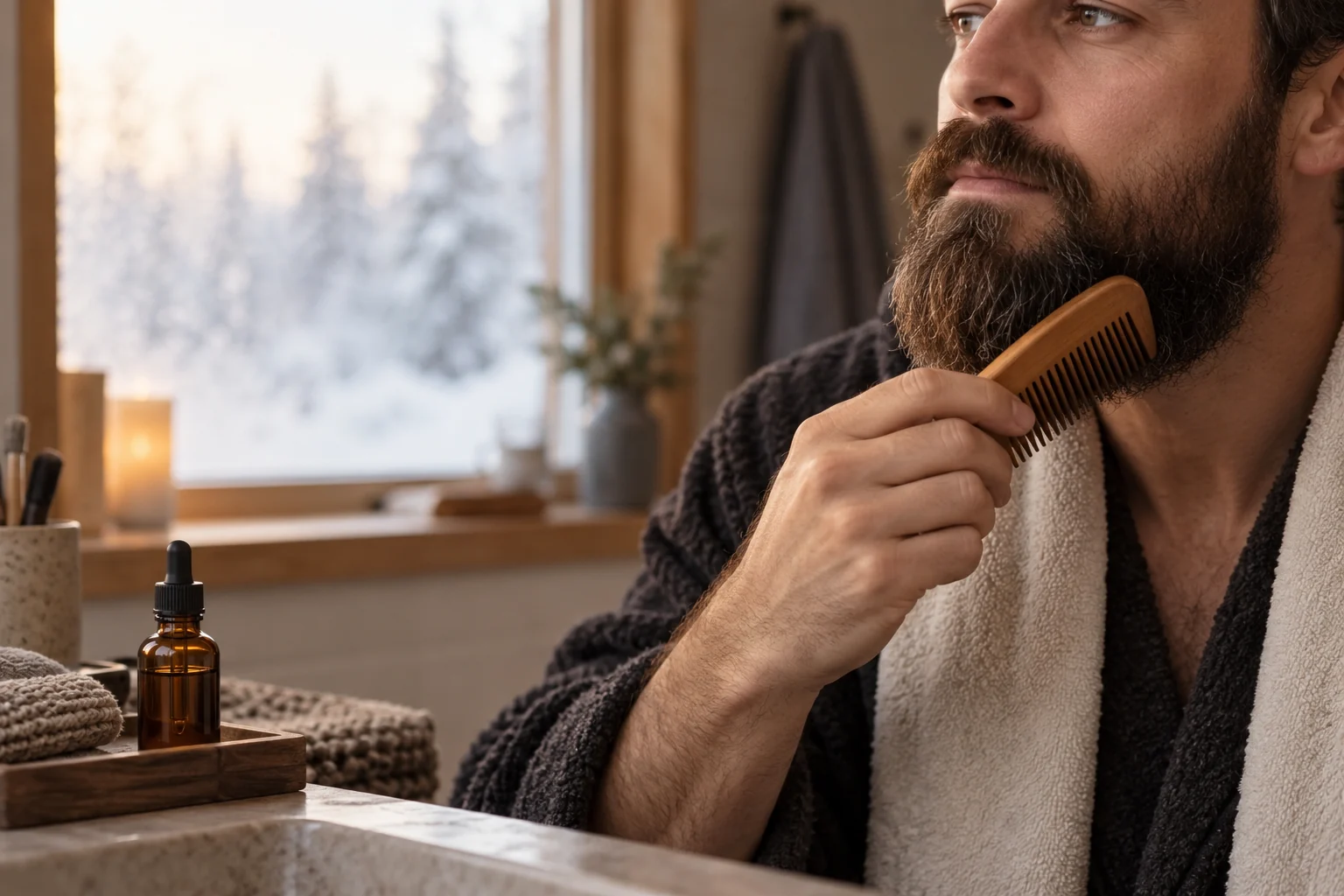
Why winter changes the way a beard feels
A beard does not shield the face from every seasonal change. Cold outdoor air often holds less moisture, while heated rooms can be dry for hours at a time. The result may be tight skin, visible flakes, static, rough ends, or an urge to scratch. Wind can add friction, especially around the chin and cheeks. The hair may feel brittle even when the real source of discomfort is the skin underneath it.
Treat the skin and the beard as one system. Softer hair begins with a clean scalp-like surface, sensible water temperature, and moisture applied where it is needed. A winter routine should be steady and uncomplicated. Adding several strongly scented products at once makes irritation harder to trace and does not replace the basics.
Use warm water instead of very hot water
A steaming shower can feel good on a cold morning, but long exposure to hot water can worsen dryness. Use comfortably warm water on the face and keep the wash brief. If you shower before beard care, finish the rest of your shower before cleansing the beard so the cleanser is not sitting on the skin for several minutes.
Rinse thoroughly. Residual cleanser can collect near the jawline, mustache, and corners of the mouth. Those are also places where toothpaste and food residue can linger. A clean rinse reduces buildup without requiring aggressive scrubbing.
Clean according to your skin, not a rigid calendar
Daily washing with a strong cleanser is not automatically better. After a sweaty workout, dusty work, or a messy meal, cleansing makes sense. On quiet winter days, a water rinse may be enough for some people. Choose a mild beard or facial cleanser and pay attention to how your skin feels an hour later. Tightness is a sign to reassess the product, water temperature, or frequency.
Use the pads of your fingers to reach the skin beneath the hair. Fingernails can create small scratches that sting when oil or balm is applied. If you have persistent redness, swelling, painful scaling, or a rash that does not settle, pause new products and speak with a dermatologist.
Dry without roughing up the cuticle
Press a clean towel against the beard rather than rubbing it back and forth. Vigorous rubbing can tangle longer hair and increase breakage at the ends. After blotting, let the beard remain slightly damp before applying a leave-in product. Damp does not mean dripping; excess water dilutes the product and encourages uneven coverage.
If you use a hair dryer, select low or moderate heat, keep it moving, and hold it away from the face. Stop when the beard is dry rather than continuing until the hair feels hot. A wide-tooth comb or gentle brush can guide the shape while air moves through it.
Apply moisture to the skin first
Dispense a small amount of beard oil into your palms, spread it between your hands, and work your fingertips through the beard to the skin. Start with less than you think you need. You can add another drop, but removing too much oil usually means washing again. The goal is comfortable skin and flexible hair, not a glossy coating.
Our existing beard oil guide explains the product category in more detail. Fragrance is optional. If winter skin is reactive, an unscented formula with a short ingredient list can make it easier to identify what works. Patch-test a new product on a small area before putting it across the entire beard.
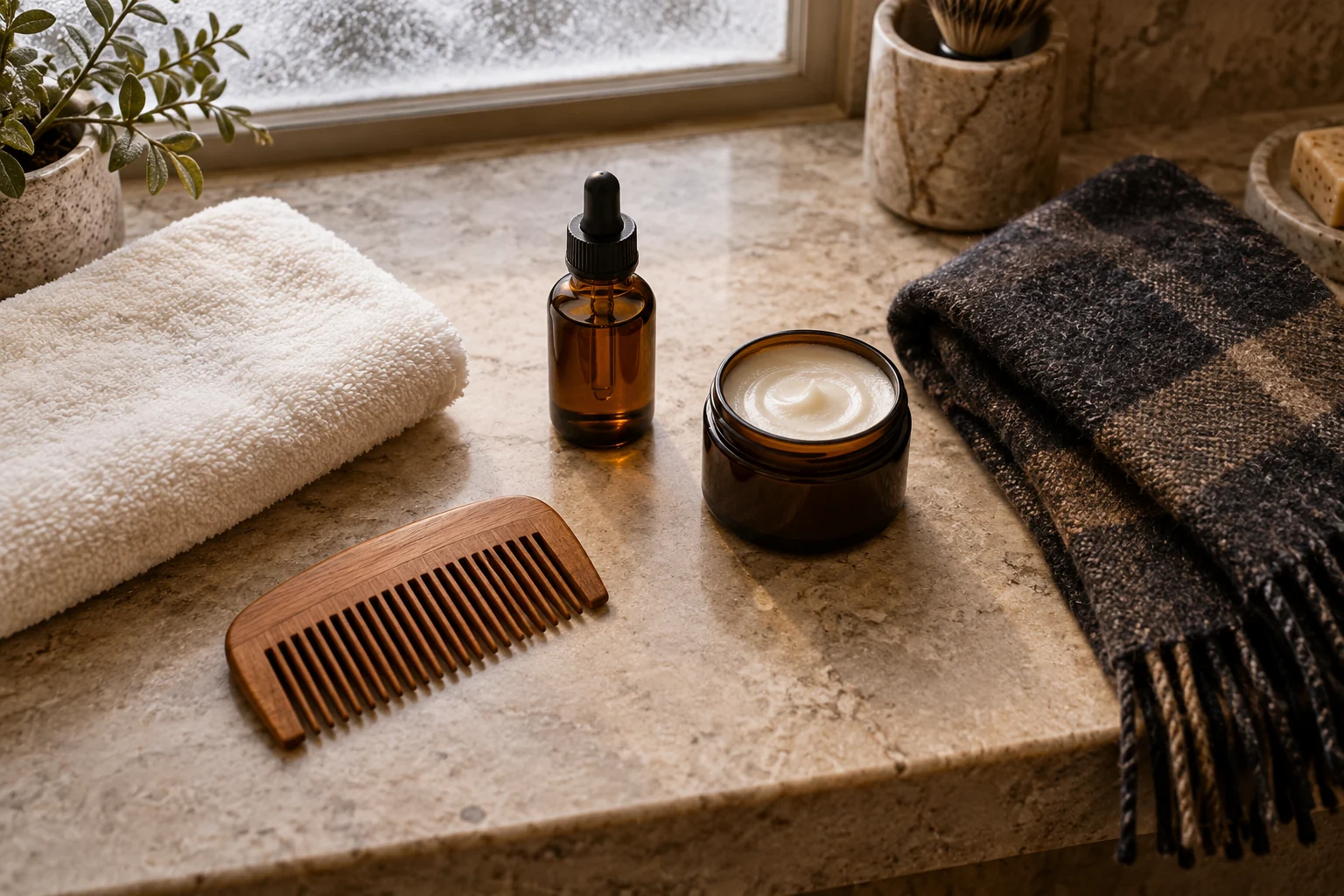
Use balm when you need hold or an extra barrier
Balm is useful when wind, scarves, or coat collars leave the beard looking unruly. Warm a small amount between the palms, distribute it through the beard, and finish with a comb or brush. Balm can reduce flyaways and add a light coating, but it should not be packed onto irritated skin.
The choice is not always oil versus balm. Some beards do well with oil at the skin and a very small amount of balm on the outer hair. Our beard balm and beard oil comparison shows how the two jobs differ. Adjust the amount before adding another product.
Reduce friction from winter clothing
Scarves, high collars, and face coverings rub the same spots repeatedly. Choose a clean, soft fabric where it touches the beard and wash it often enough to remove skin oil and product residue. When possible, loosen the collar after coming indoors. A quick comb with clean hands can release hair that has been folded against the neck.
Do not compensate for friction by applying a heavy layer of oil directly before wrapping the beard. That can transfer product to fabric and hold debris against the skin. Apply grooming products, give them a few minutes to settle, then put on outerwear.
Build a simple weekly reset
Once a week, inspect the beard in good light. Look for split ends, product buildup, redness, and areas that feel different from the rest. Wash combs and brushes according to their material, replace dirty towels, and trim only obvious damaged ends if you are comfortable doing so. Clean tools keep an otherwise sensible routine from reintroducing residue.
Also check the room. A humidifier may make a dry bedroom more comfortable, but it must be cleaned and operated according to its manual. It is not a substitute for treating a skin condition. Hydration, sleep, and a balanced diet support general health, but no drink or supplement can guarantee a particular beard texture.
A five-minute cold-weather routine
In the morning, rinse or cleanse as needed, blot until slightly damp, apply a modest amount of oil to the skin, then shape the beard. Add balm only when the beard needs control or protection from friction. At night, rinse away visible debris and avoid sleeping with a beard that is still wet.
Change one variable at a time. Give a gentler cleanser or smaller product amount several days before deciding whether it helps. That makes the routine easier to repeat and gives you a clearer picture of what is causing dryness or irritation. Winter beard care should feel uneventful: clean skin, flexible hair, and no lingering sting.
When the routine needs to change
Milder weather, a shorter trim, or a different work environment can change how much cleansing and conditioning you need. Reassess after travel, illness, a move, or a major change in beard length. A product amount that suited a full beard may sit heavily on short growth, while a longer beard may need more careful distribution rather than simply more oil.
Keep notes if irritation repeats. Record the cleanser, leave-in product, fragrance, weather, and where the reaction appeared. Stop any product that burns or produces a rash. Dandruff-like scaling, acne, ingrown hairs, or patchy hair loss can have causes that grooming alone will not solve. A board-certified dermatologist can examine the skin and recommend treatment without requiring you to remove a healthy beard unless there is a medical reason.