
Reviewed and updated: October 17, 2026
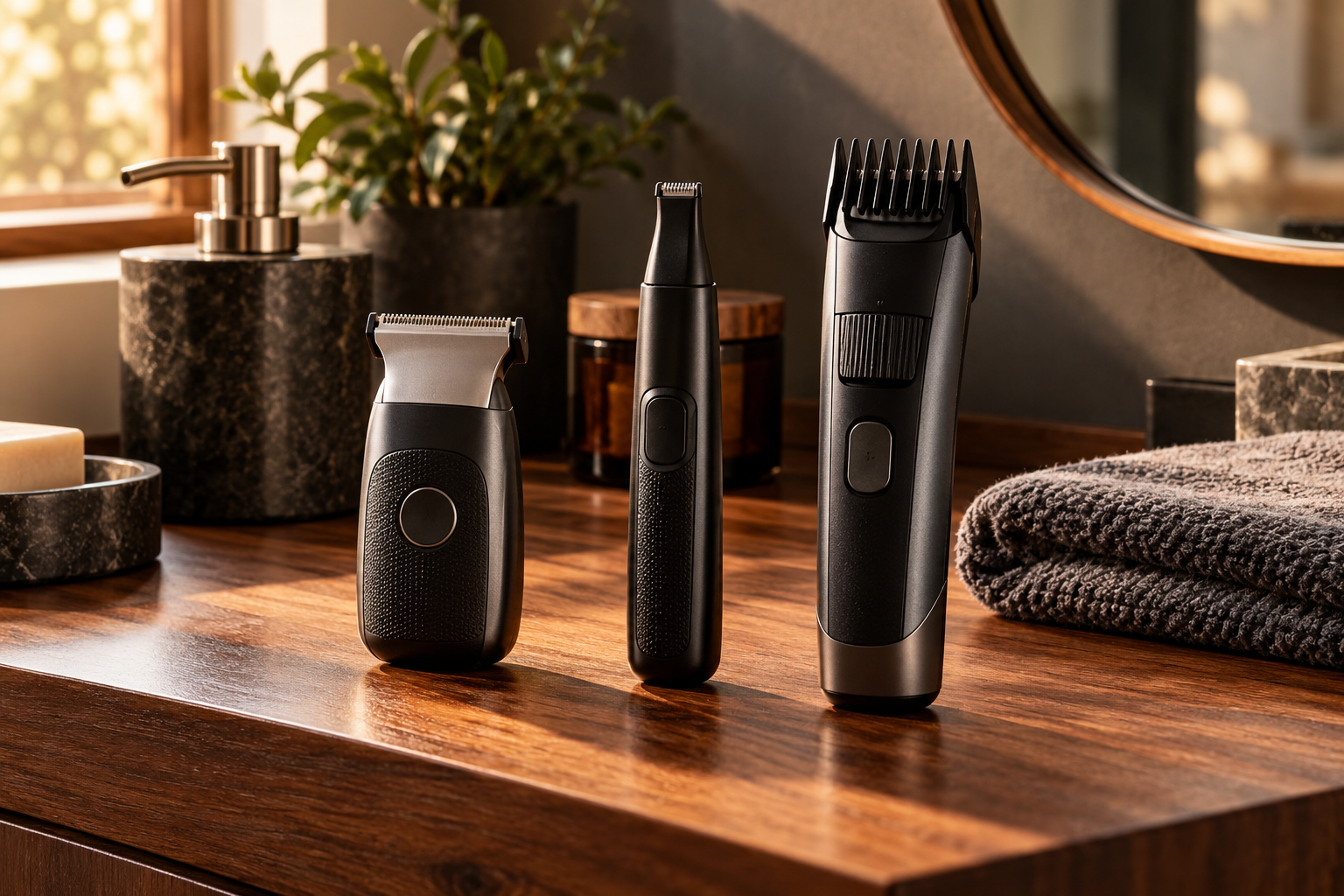
A neckline tool should make short, controlled edges without forcing you into the closest possible shave. Compare blade shape, guards, replacement parts, charging, cleaning, and the finish you actually want.
This guide was reviewed against current official product information where a model is discussed. Specifications and packages can change, so verify the exact label or manufacturer page before acting.
Choose the finish before the tool
A hybrid edge-and-shave tool, a narrow T-blade detailer, and a guarded beard trimmer solve different problems. Decide whether you want a crisp visible boundary, short stubble below the jaw, or a blended transition. The closest tool is not automatically the best one. Skin that develops bumps or irritation may do better with a guarded finish and fewer passes. Map the neckline first, then choose the tool that can reach that line without forcing the blade into folds or working blindly beneath the chin.
Use the current model number
Product families often keep the same marketing name while the handle, battery, comb, charger, or included blades change. Philips currently lists the OneBlade 360 Face QP2724/70 with a flexible 360 blade and a five-in-one adjustable comb. Treat that number as part of the product name. Check the listing, box, manual, and replacement-blade compatibility before buying. A review of an older OneBlade, Wahl, Braun, or Andis model cannot confirm the accessories in a current package.
Compare the cutting head
A narrow head improves visibility around corners and mustache edges, while a wider trimmer clears bulk faster. Rounded tips and guarded designs may reduce direct blade contact, but no cutter is irritation-proof. Look for a head that can be cleaned as the manufacturer directs and replaced without discarding the handle. If you wear a longer beard, confirm that the comb reaches your normal length; a precision tool with only short settings may still require a second trimmer for the rest of the beard.
Look at guards and repeatability
A guard is useful only when it locks securely and returns to the same length. Numbered combs are easy to document, while a dial can offer smaller increments. Photograph the setting you use on the neck and keep the manual. Flexible guards can follow curves but may compress hair differently under pressure. Start longer than the final target and work down. For a soft neckline, one or two guarded steps usually create a more forgiving result than removing the guard and drawing a hard line immediately.
Check power and charging
Battery claims are measured under specific conditions and change with blade condition, hair density, and temperature. More important questions are whether the unit shows remaining charge, works only cordless, includes the required adapter, and uses a cable you can replace. Philips notes USB charging on current OneBlade documentation, and some packages omit the wall adapter. Confirm the exact contents. A travel-friendly trimmer should also have a blade cover or lock that prevents accidental activation inside a bag.
Plan for cleaning and parts
Hair packed beneath a cutter changes performance. Follow the exact wet, dry, brush, oil, and disassembly instructions for the model. Waterproof marketing does not mean every charger, cable, or attachment may be rinsed. Price replacement blades, foil heads, guards, and batteries before choosing a handle. A low purchase price becomes less attractive when proprietary cutters are difficult to find. Replacement availability also matters more than an oversized accessory kit containing combs you will never use.
Match the tool to sensitive skin
Do a small test below one jaw corner, use light pressure, and stop after one or two passes. Heat, tugging, repeated strokes, and shaving against growth can make a precise line look inflamed. Clean skin and a clean cutter help, but they do not replace technique. If bumps recur, leave slightly more length, reduce frequency, and consider guidance from a dermatologist. Do not use a shared trimmer without appropriate cleaning, and never continue with a chipped blade, damaged guard, or cutter that pulls.
Make the buying decision
Choose the simplest system that covers your normal length, neckline finish, cleaning routine, and travel needs. The OneBlade 360 is one current reference point for flexible edging and short trimming; a narrow detailer offers different visibility, and a full adjustable trimmer offers broader length control. Use the manufacturer pages to verify specifications, then use the Amazon search links to compare current packages. The affiliate links intentionally open search results because package contents and availability can change.
Quick checklist
- Define the desired neckline finish.
- Verify the exact model number and package.
- Confirm guard range and replacement parts.
- Check charging method and included adapter.
- Test a small area with light pressure.
- Compare current listings without relying on price claims.
Why these checkpoints matter
- Define the desired neckline finish. This defines the starting condition and prevents the rest of the process from resting on an assumption.
- Verify the exact model number and package. This narrows the choice to evidence you can verify on the exact label, model, or scene.
- Confirm guard range and replacement parts. This checkpoint reduces avoidable risk before another variable is introduced.
- Check charging method and included adapter. This keeps the routine compatible with the person, product, material, or equipment involved.
- Test a small area with light pressure. This creates a repeatable step instead of relying on memory or marketing language.
- Compare current listings without relying on price claims. This final review catches changes in condition, availability, or instructions before the next use.
Common questions
Is a T-blade always best for a neckline?
No. It improves visibility and edge control, but a guarded hybrid tool may be more comfortable for some skin. Technique and the desired finish matter more than the blade label.
Can one trimmer handle the whole beard?
Sometimes. Confirm the longest guard covers your beard and the head is precise enough for the edge. Many people prefer one adjustable trimmer and a separate detail tool.
How often should a cutter be replaced?
Follow the manufacturer’s guidance and replace it sooner if it chips, pulls, overheats, or no longer cuts consistently after proper cleaning.
Official product references
Compare current Amazon listings
Philips OneBlade 360 QP2724/70
Confirm the exact model, package contents, seller, current price, and availability before ordering.
narrow detail trimmers
Confirm the exact model, package contents, seller, current price, and availability before ordering.
adjustable beard trimmers
Confirm the exact model, package contents, seller, current price, and availability before ordering.