
Reviewed and updated: October 19, 2026
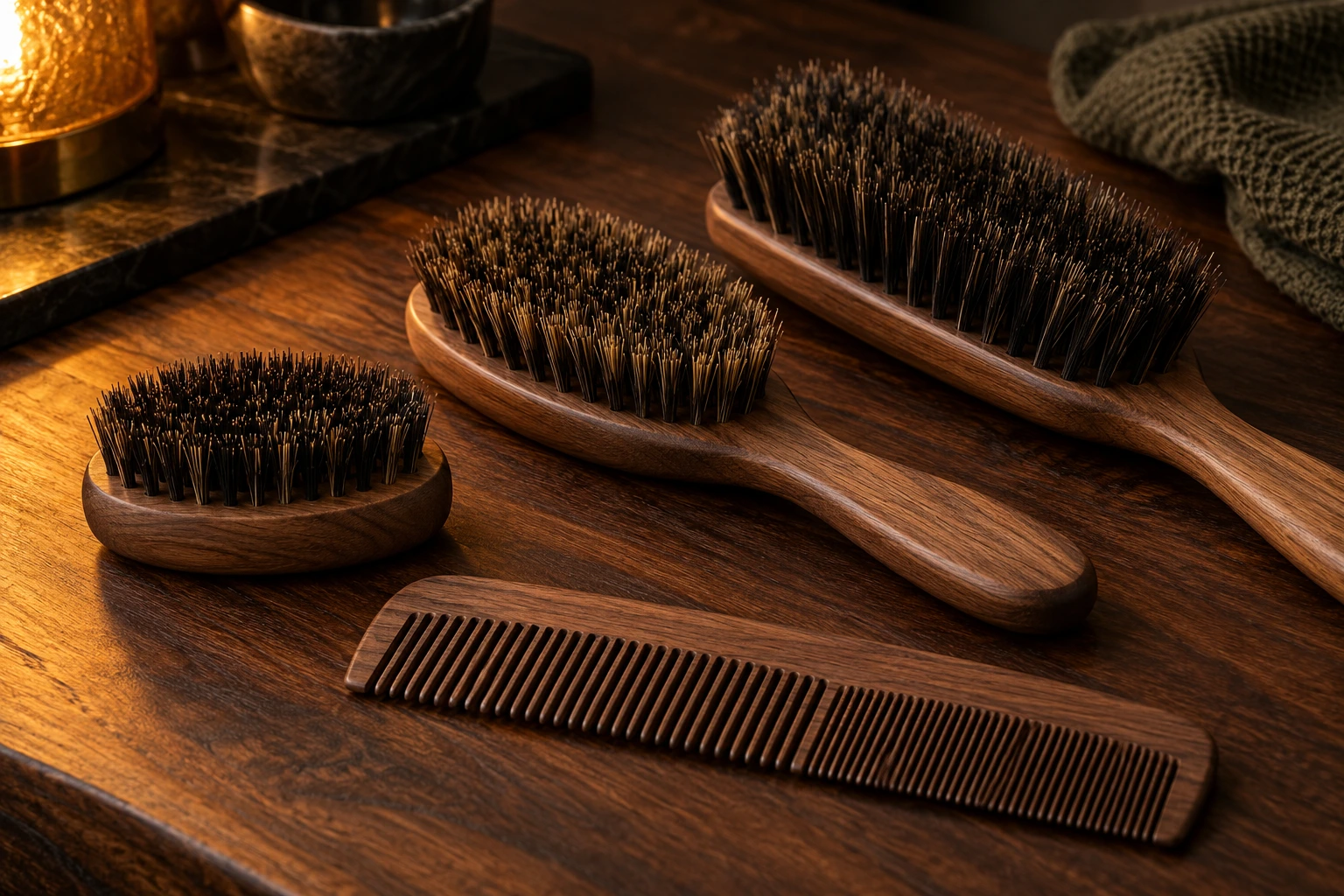
Brush shape and bristle feel should match beard length, density, skin sensitivity, and the job you want the brush to do. A bigger or stiffer brush is not automatically better.
Start with beard length and density
Short beards usually need a compact brush that can reach the hair without scraping the skin. Medium growth benefits from a broader contact area, while long or dense beards may need longer pins or a comb before brushing. Judge the actual growth on the cheeks, chin, and neck rather than buying from the length label alone.
Choose bristle feel carefully
Natural boar bristles vary from soft to firm, and synthetic bristles can provide a vegan alternative with different flex and static behavior. Sensitive, inflamed, or acne-prone skin may not tolerate an aggressive brush. The useful brush moves through the beard with light pressure and does not leave lasting redness.
Compare current reference designs
Beardbrand currently describes oval, round, and travel brushes made with boar hair, but its live product page may show changing stock. Kent lists dedicated beard brushes in several shapes and bristle patterns. Dimensions, materials and shape determine how a brush fits your hand and beard.
Use a brush for the right job
A brush distributes oil, lifts loose debris, and helps hair lie in a consistent direction. It does not detangle severe knots as safely as a wide-tooth comb used from the ends upward. Apply only the amount of beard product your skin and hair need; brushing cannot correct heavy buildup or a formula that causes irritation.
Check handle and travel size
An oval palm brush offers control, a handled brush adds reach, and a travel brush saves room but may require more passes. Check grip when hands are damp and whether the wood or finish should be kept away from water. A protective pouch keeps bristles from collecting lint in a drawer or toiletry bag.
Brush a dry, clean beard
Follow the maker instructions, but most beard brushes work best after the beard is clean and dry. Begin gently in the direction of growth, then shape the surface without digging into skin. Stop when hair snags repeatedly, skin feels hot, or bristles shed excessively. More passes do not create more growth.
Clean without damaging the base
Lift trapped hair with a comb or brush-cleaning tool, then use only the wet-cleaning method allowed for that material. Wooden bases and glued bristles may warp or loosen when soaked. Dry the brush bristle-side down or as directed, away from high heat, and replace it when the base cracks or bristles become sharp.
Choose for comfort and repeatability
Pick a softer compact brush for short growth and sensitive skin, a larger oval or handled brush for routine medium-beard shaping, and a longer-pin brush or comb-and-brush system for dense length. Brush width and bristle material matter most when a beard is dense or the skin underneath is sensitive.
Quick checklist
- Match brush size to beard length.
- Choose a tolerable bristle firmness.
- Verify materials and dimensions.
- Detangle before forcing a brush.
- Use light pressure on dry hair.
- Clean and dry as directed.
Why these checkpoints matter
- Match brush size to beard length. This defines the starting condition and prevents the rest of the process from resting on an assumption.
- Choose a tolerable bristle firmness. This narrows the choice to evidence you can verify on the exact label, model, or scene.
- Verify materials and dimensions. This checkpoint reduces avoidable risk before another variable is introduced.
- Detangle before forcing a brush. This keeps the routine compatible with the person, product, material, or equipment involved.
- Use light pressure on dry hair. This creates a repeatable step instead of relying on memory or marketing language.
- Clean and dry as directed. This final review catches changes in condition, availability, or instructions before the next use.
Common questions
Can brushing make a beard grow faster?
No. Brushing can arrange hair and distribute product, but it does not change follicle growth.
How often should I brush?
Use the least amount that keeps the beard orderly without causing friction, breakage, or skin irritation.
Is boar hair required?
No. Synthetic and mixed options can work; compare stiffness, static, cleaning, durability, and your material preferences.
Official product references
- Beardbrand Beard Brush
- Kent beard brushes
Compare current Amazon listings
Beardbrand beard brush
A beard-brush option when its shape and bristle feel suit your daily grooming routine.
Kent beard brush
A traditional beard-brush option when you prefer brushing to combing during everyday grooming.
soft synthetic beard brush
A synthetic-bristle option when you’d rather leave animal bristles out of your grooming kit.
Keep the decision useful
Write down the exact model, label, starting condition, and result. Change one variable at a time and return to the official instructions when anything is unclear. A short record makes the next decision easier and keeps an isolated result from becoming a rule that does not fit a different product, person, material, or environment.
Review the information again before repeating the process. Stop when comfort, safety, condition, or the manufacturer’s instructions provide a reason to stop. A useful routine stays simple because every step answers a real question.
For the next attempt, note what improved, what remained uncertain, and what should stay unchanged. This final check reduces guesswork and helps small problems become visible before they turn into repeated mistakes.
Keep the original instructions, model information, and observations together. Before repeating the process, confirm that the product, setting, environment, and intended result are still the same.
Use the result as one observation rather than a promise. Conditions change, and the safest next step is the one supported by the current label, manual, evidence, and the limits you can verify.