
Reviewed and updated: October 21, 2026
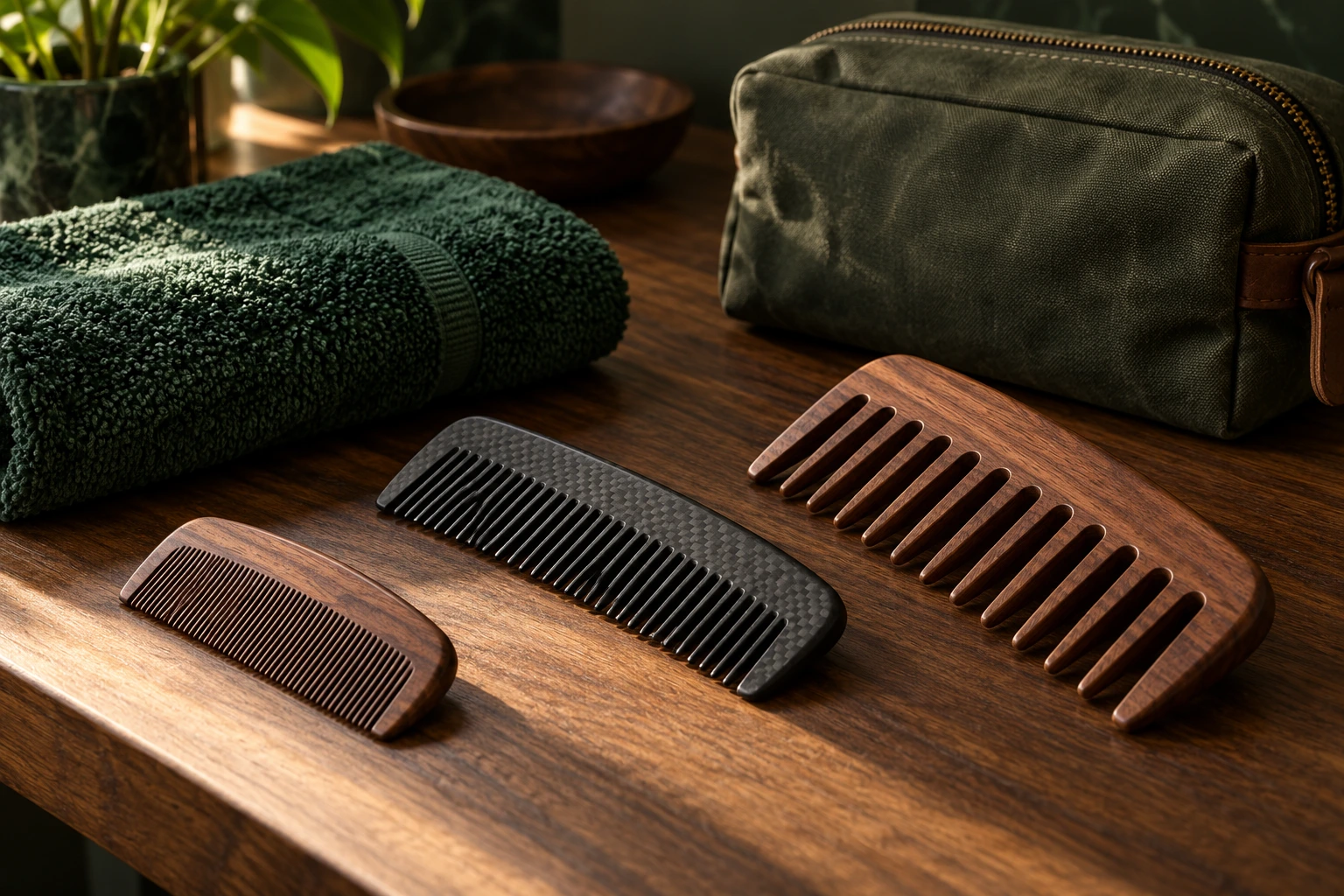
A beard comb should match hair length, curl pattern, and the job in front of it. Tooth spacing, edge finish, size, and material matter more than an impressive-looking case.
This guide was reviewed against current official product information where a model is discussed. Specifications and packages can change, so verify the exact label or manufacturer page before acting.
Match the teeth to the beard
Fine or medium teeth can guide a short, relatively straight beard, while wide teeth give dense, curly, or longer growth more room. A mustache often benefits from a smaller section with closer teeth. The right comb should pass through a prepared beard without forcing knots, scraping skin, or pulling several hairs at once.
Check how the edges are finished
Look closely at the spaces between teeth and the tips that touch skin. Rough mold seams, sharp corners, and chipped wood can catch hair. Chicago Comb says its models are hand and machine finished, and its beard collection maps several models to small, medium, and large beards. Whatever brand you choose, smooth finishing is a basic requirement.
Use a compact comb for precision
A short pocket comb such as Chicago Comb Model 2 is easier to control around a mustache, neckline, and short beard. Compact size also travels well. It gives up some leverage and detangling speed, so it is less suitable for working through a thick, long beard in one pass.
Use wider spacing for density and curls
Long, curly, or especially dense beards generally need more space between teeth. Chicago Comb identifies Models 7, 8, 10, 11, and 12 for larger beards, with Model 10 described as a compact wide-tooth option. Begin at the ends, support the hair with the free hand, and move toward the roots gradually.
Compare material without myths
Carbon-fiber composite can be light, durable, and less prone to static than ordinary molded plastic. Hand-finished metal can last a long time but may feel heavier and colder. Wood can feel warm and attractive but needs careful cleaning and drying. Material alone does not guarantee smooth teeth, comfort, or good beard fit.
Detangle before trying to shape
Do not drive a fine comb into a dry knot. Separate obvious tangles with fingers, add a small amount of a compatible grooming product if that is part of the routine, and work from the ends upward. Once the comb passes comfortably, use longer strokes to set direction. Pain and snapping mean the technique or tooth spacing needs adjustment.
Keep the comb clean and intact
Remove trapped hair after use and clean the comb according to its material and maker instructions. Do not soak wood unless its manufacturer permits it. Let every comb dry fully before returning it to a pouch. Retire a comb with bent teeth, cracks, corrosion, or rough damage that can snag hair or scratch skin.
Choose by job, not collection size
For a short beard and mustache, start with a smooth compact medium-fine comb. For mixed grooming, consider a dual-spacing design. For a large or curly beard, prioritize longer or wider teeth. Verify the exact current model on the maker site, then compare the same model in paid Amazon results. Availability remains unverified while Amazon API eligibility is blocked.
Quick checklist
- Choose tooth spacing for density.
- Inspect edges and tips for smoothness.
- Detangle from the ends upward.
- Use compact teeth for precision.
- Clean by the material instructions.
- Retire cracked or rough combs.
Why these checkpoints matter
- Choose tooth spacing for density. This defines the starting condition and prevents the rest of the process from resting on an assumption.
- Inspect edges and tips for smoothness. This narrows the choice to evidence you can verify on the exact label, model, or scene.
- Detangle from the ends upward. This checkpoint reduces avoidable risk before another variable is introduced.
- Use compact teeth for precision. This keeps the routine compatible with the person, product, material, or equipment involved.
- Clean by the material instructions. This creates a repeatable step instead of relying on memory or marketing language.
- Retire cracked or rough combs. This final review catches changes in condition, availability, or instructions before the next use.
Common questions
Can one comb handle every beard?
A smooth dual-spacing comb can cover many routines, but very dense or long beards often benefit from wider teeth.
Is metal automatically better than wood?
No. Finish quality, tooth spacing, comfort, cleaning, and the beard itself matter more than material prestige.
Should I comb a soaking-wet beard?
Wet hair stretches easily. Blot first, use fingers for tangles, and follow the product and grooming routine that suits your beard.
Official product references
- Chicago Comb beard and mustache collection
- Chicago Comb tooth-spacing FAQ
Compare current Amazon listings
Chicago Comb Model 2
Confirm the exact model, package contents, seller, current price, and availability before ordering.
Chicago Comb Model 10
Confirm the exact model, package contents, seller, current price, and availability before ordering.
wide-tooth beard combs
Confirm the exact model, package contents, seller, current price, and availability before ordering.
Keep the decision useful
Write down the exact model, label, starting condition, and result. Change one variable at a time and return to the official instructions when anything is unclear. A short record makes the next decision easier and keeps an isolated result from becoming a rule that does not fit a different product, person, material, or environment.
Review the information again before repeating the process. Stop when comfort, safety, condition, or the manufacturer’s instructions provide a reason to stop. A useful routine stays simple because every step answers a real question.
For the next attempt, note what improved, what remained uncertain, and what should stay unchanged. This final check reduces guesswork and helps small problems become visible before they turn into repeated mistakes.
Keep the original instructions, model information, and observations together. Before repeating the process, confirm that the product, setting, environment, and intended result are still the same.
Use the result as one observation rather than a promise. Conditions change, and the safest next step is the one supported by the current label, manual, evidence, and the limits you can verify.
Use the result as one observation rather than a promise. Conditions change, and the safest next step is the one supported by the current label, manual, evidence, and the limits you can verify.