
Reviewed and updated: October 31, 2026
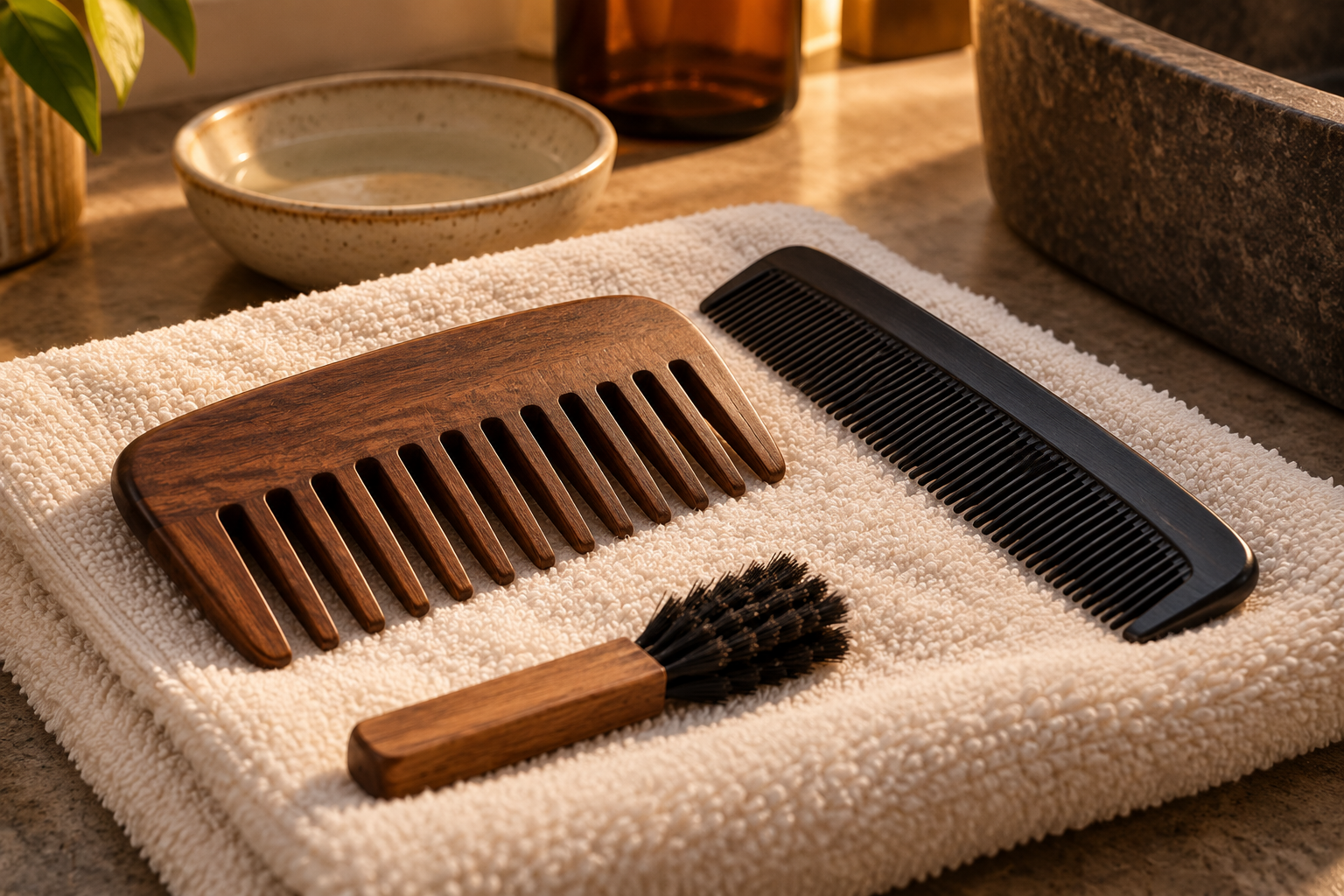
The easiest beard-comb cleaning routine starts before the sink: remove trapped hair, identify the comb’s material, and use the gentlest cleaning method its maker allows. A wooden comb and a washable plastic comb can look similar in a drawer but need different treatment. Soaking both in the same cup of hot water is a poor shortcut.
A clean comb should glide without sticky deposits, sharp edges, or a strong leftover cleaner smell. You do not need a complicated grooming station to get there. A good light, a soft brush, a clean cloth, and a little patience are more useful than aggressive scraping. This guide covers everyday personal-use combs, with extra care for wooden teeth and delicate finishes.
Identify the material before adding water
Look for the care information that came with the comb. Solid wood, laminated wood, horn, metal, hard rubber, and molded plastic are different materials; decorative coatings and glued parts add another complication. If the material is unclear, begin with dry cleaning and ask the maker before wetting it. A shiny surface does not prove that the comb is waterproof.
Wooden combs deserve particular restraint. Avoid soaking them or leaving them on a wet counter. A brief wipe may be permitted for one finish while another requires a different approach. The same caution applies to horn and mixed-material handles. Dishwasher heat, boiling water, strong solvents, and a long disinfectant bath are not universal cleaning methods for grooming tools.
Remove hair while the comb is dry
Hold the comb over a bin and lift loose hair away with your fingers. Work from the open ends of the teeth toward the spine, keeping pressure light. If a knot has wrapped around several teeth, loosen the knot rather than bending the teeth apart. A wooden tooth can split even when the whole comb still feels sturdy.
Next, use a soft cleaning brush to sweep through each gap. Brush from both faces so you do not simply move a strip of residue to the opposite side. Avoid needles, knife tips, and abrasive scouring pads. They can scratch a smooth tooth or leave an edge that catches facial hair the next time you groom.
Separate product buildup from damage
Beard balm and styling products can leave a waxy film along the base of the teeth. Start by wiping that film with a soft dry cloth. If your fingers feel a ridge after the visible deposit is gone, inspect it closely: the ridge may be a molding seam, chip, or split rather than dirt that needs harder scrubbing.
Do not keep scraping a damaged spot in the hope of making it smooth. Compare the teeth in strong light and feel them gently with a cloth. If the cloth snags, set the comb aside. Our guide to preventing beard split ends and breakage explains why reducing unnecessary pulling matters more than forcing a comb through a rough section.
Clean washable combs with controlled moisture
For a comb whose care instructions permit washing, use the specified water temperature and a small amount of suitable cleanser. Clean the spaces between teeth with the soft brush, keeping the comb supported instead of pushing hard across the tooth ends. Rinse as directed until no cleanser or loosened residue remains. A slick feel after rinsing usually deserves another look.
Wash the tool itself rather than soaking everything from your grooming drawer together. Loose brush bristles, shaving residue, and hair clippings can collect in the same bowl and settle back onto the comb. Keep the process simple: clean area, one comb, fresh rinse, and a clean drying surface. Follow any material-specific restrictions on detergents and contact time.
Treat wood as a finished object
If the maker allows a lightly damp cloth, wring it out well before wiping a wooden comb. Clean a small area, then dry it promptly with a second cloth. Pay attention to the tooth roots, where product tends to accumulate. Do not flood those gaps, flex the teeth, or use a hair dryer to hurry things along.
Skip homemade oil treatments unless the comb’s instructions recommend them. An oil suitable for conditioning a beard is not automatically suitable for a wood finish. Adding more oil to a dirty comb can also trap the residue you meant to remove. If a finish becomes rough, sticky, swollen, or cracked, stop using the tool and check its care guidance.
Let every gap dry before storage
Pat a washable comb dry and leave it in an airy place on a clean surface until moisture is gone from the spaces between teeth. Keep it away from direct heat. A closed pouch can hold moisture even when the broad faces feel dry. Turn the comb over if the drying surface remains damp underneath it.
Check the storage spot as well. A bathroom shelf beside a splashing sink may keep rewetting the tool. A dry drawer or ventilated organizer can be a better choice, provided the comb is already dry. Do not pack a damp comb for travel and assume it will dry in a sealed toiletry bag between stops.
Adjust frequency to what the comb actually collects
Remove loose hair after use and inspect the comb before it goes back into your beard. A full cleaning is due when you see deposits, feel drag from buildup, or spill product on the teeth. Someone using wax-heavy balm may need attention sooner than someone using the comb on a clean, dry beard with little styling product.
Avoid cleaning so aggressively that the routine wears out the finish. The goal is to remove residue, not to make the tool look newly sanded. If the comb keeps getting sticky immediately after grooming, review how much product you apply and whether it is distributed evenly. Our beard-washing guide can help you review the routine around the comb too.
Keep personal tools personal
A quick rinse does not establish that a grooming tool is safe to share. Keep your everyday beard comb separate from other people’s tools, especially when there is irritated or broken skin. If a tool is contaminated or needs a specific disinfection process, follow material-compatible professional guidance rather than improvising a chemical mixture from household cleaners.
Travel is another reason to protect the teeth. Use a clean pouch or compartment that prevents keys and hard toiletry lids from pressing against them. Clean the pouch when it becomes oily or full of hair. A freshly cleaned comb dropped into an old, dirty case will quickly collect the same debris again.
Make the final check part of grooming
Before the next use, look between the teeth, feel for roughness, and confirm the comb is fully dry. If it still catches, do not assume your beard needs more force. Try a small, detangled section and stop if the teeth pull. Clean the comb again only when residue is the cause; replace a damaged tool when necessary.
A reliable routine takes a few deliberate steps: clear hair, check the material, clean within its limits, dry thoroughly, and store without pressure on the teeth. That keeps cleaning useful and proportionate. The comb should make grooming calmer, and its maintenance should be just as straightforward.