
Reviewed and updated: November 1, 2026
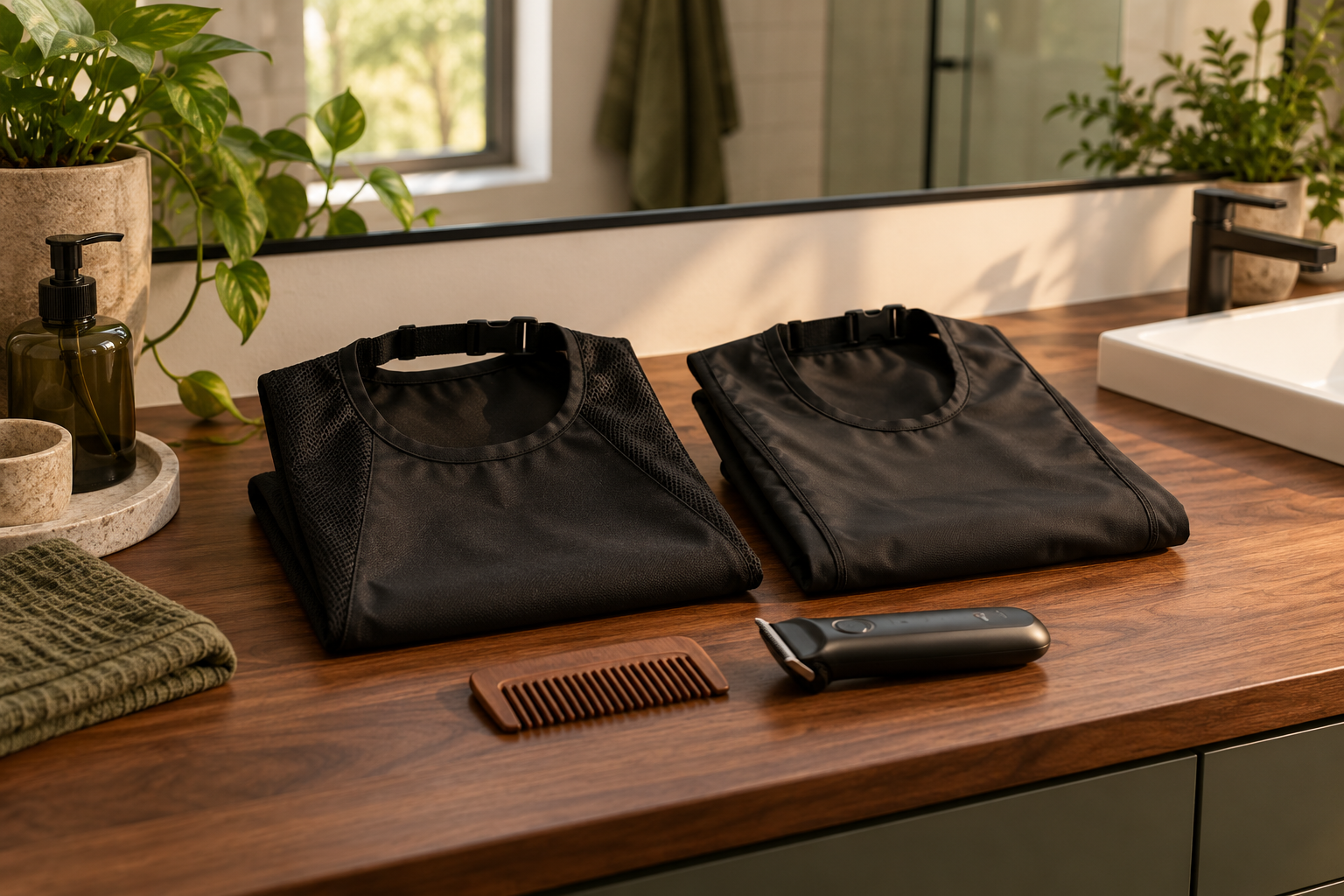
A beard bib is useful only when it stays comfortable, catches the clippings that normally scatter around the sink, and empties without creating a second mess. The product looks simple, but small differences in neck closure, fabric width, suction-cup design, and storage can determine whether it becomes part of a weekly trim or stays folded in a drawer. This guide focuses on fit and routine rather than marketing claims, so you can decide whether a beard bib belongs in your setup.
BEARD KING Beard Bib Hair Clippings Catcher
A neck-worn trimming apron designed to attach to a mirror and collect clippings. Check neck closure, cup style, fabric width and storage method before ordering.
Start with the room, not the product
Stand where you normally trim and look at the mirror, counter, faucet, and floor. A bib must span the space between your neck and the mirror without stretching so tightly that the edges curl inward. A narrow vanity may need less fabric than a deep counter. A mirror with a thick frame, textured surface, or nearby cabinet may leave fewer places for suction cups. Measure the approximate distance from your collarbone to the mirror before choosing a design.
The mirror also needs a clean, smooth area for the cups. Dust, cosmetics, and steam residue can weaken the seal. If the only usable area is high above your shoulders, the bib may pull against your neck. If it is too low, the fabric can sag into the sink. A quick dry rehearsal with a towel helps reveal whether the basic geometry will work.
Compare neck closures carefully
The neck opening should sit close enough to stop short clippings from dropping inside a shirt, but it should not feel tight or scratchy. Hook-and-loop closures offer adjustment, although exposed edges can catch longer beard hair. Snap systems have fixed positions. Drawcords can fit a broad range but may create a lump at the back of the neck. Choose the mechanism you can fasten without looking and release without pulling hair.
Think about what you wear while trimming. A bib placed over a high collar fits differently than one used with a bare neck. If you trim immediately after a shower, make sure the closure material will not feel irritating against damp skin. People with longer hair may also need to clip it above the closure before fastening the apron.
Width, depth, and clipping control
A wider apron covers more of the counter, but extra fabric can fold over itself and roll clippings back toward you. The useful dimension is not simply total width; it is the smooth, supported area between the neck and the mirror. Look for enough depth to create a shallow catching surface without touching the faucet. Dark fabric makes light clippings easy to see, while light fabric can make dark clippings easier to spot during cleanup.
Very light fabric stores easily, yet a bathroom fan can move it. Heavier fabric tends to stay flatter but may pull harder on the mirror cups. A smooth surface is usually easier to empty than a fuzzy one. Water-resistant material can be wiped, but it still needs to dry completely before storage. The best balance depends on the room and how often you trim.
Suction cups and mirror attachment
Inspect the cups before each use. The rims should be flexible, clean, and free of nicks. Press them onto dry glass and give each anchor a gentle tug before turning on a trimmer. Do not attach a bib to a cracked mirror or a fragile decorative panel. If a cup releases during the trim, stop the tool before reattaching it so the apron cannot fall into the trimmer.
Some systems use hooks that remain on the mirror while the apron is removed. That can shorten setup time, but the hooks should not block normal cleaning or create a sharp edge. Removable cups keep the mirror clear between uses. Neither arrangement compensates for residue on the glass, so clean the attachment area and let it dry first.
A practical product reference
The BEARD KING Beard Bib Hair Clippings Catcher is the kind of mirror-mounted apron many shoppers mean when they search for a beard bib. Use the Amazon search action in the product card to confirm the complete product name, included suction cups, closure style, color, and storage accessory. Search results can contain similar aprons, replacement parts, or bundles, so compare the listing details rather than relying on the first image.
This type of product is best for dry trimming. It is not a shaving cape, a towel, or a surface for wet lather. If your routine uses beard oil before trimming, delay the oil until after cleanup because oily clippings can cling to the fabric. Keep the trimmer cord or charging cable above the bib so it does not drag across the catching surface.
Empty it without making another mess
Turn the trimmer off and set it on a dry surface before releasing anything. Unhook one mirror corner while keeping the opposite corner supported. Bring the loose corner toward the center to form a shallow pouch, then release the second corner. Carry the gathered bib to a trash bin and tip the clippings out slowly. Avoid shaking it over a sink, since hair can collect around the drain and plumbing.
Use a soft brush or dry cloth for stubborn pieces. Follow the care directions for washing; frequent machine washing may not be appropriate for every coated fabric or closure. If you wipe it with a damp cloth, hang it fully open until both sides are dry. Folding a damp apron can trap odor and weaken attachment pieces over time.
Storage and maintenance
Store the cups without crushing their rims. Keep hook-and-loop closures fastened so they do not snag the fabric. A breathable pouch or drawer is better than a sealed bag if any moisture remains. Do not wrap the apron around the trimmer because clipped hair can move into the blade guard, charging port, or switches.
Make the bib part of a broader cleanup routine. Brush the trimmer, inspect the blade area, and wipe the counter after every use. Our guide to cleaning a beard trimmer between uses covers the tool itself, while cleaning a beard comb without damaging the teeth helps keep loose clippings from returning to a clean beard.
Who should skip a beard bib?
A bib may be unnecessary if you trim outdoors in a permitted area, use a dedicated barber cape with a helper, or have a compact sink setup that is easier to wipe directly. It can also be awkward with very low mirrors, pedestal sinks, or mirrors that will not accept suction cups. In those cases, a washable counter mat or carefully placed towel may be simpler, provided it stays clear of the trimmer.
The right choice is the one that reduces cleanup without adding discomfort or risk. Measure the space, favor a comfortable closure, verify the attachment point, and plan how you will empty and dry the fabric. A beard bib should make the trimming routine calmer and cleaner, not merely add another accessory to manage.