
Reviewed and updated: November 2, 2026
Cold air, indoor heat, scarves, and synthetic coats can turn a normally cooperative beard into a halo of flyaways. Beard static is not a sign that you need a stronger styling product. It usually means dry hair is rubbing against another surface and building an electrical charge. The most reliable fix is a routine that adds a little moisture, reduces friction, and avoids overworking the beard.
Start with the weather, not the beard
Static often appears when outdoor humidity falls and heated indoor air dries out. A beard that behaved well in September may feel rough or stand away from the face in January even though nothing else changed. Long beards show the effect first because more hair touches collars, scarves, pillowcases, and coat linings.
Before changing every product, notice when the problem appears. Static that begins after pulling on a fleece, removing a knit hat, or taking off a coat is mainly friction-related. Static that persists all day, along with brittle ends or itchy skin, points to a moisture problem too. Most people have some of both.
Wash less aggressively
Hot water and strong cleansers can strip the oils that help beard hair lie smoothly. Use warm rather than very hot water, and choose a beard wash or gentle facial cleanser instead of repeatedly using a harsh body soap. You do not have to shampoo the beard every time it gets wet. On non-wash days, a thorough rinse may be enough after light activity.
Rinse carefully so cleanser does not remain near the roots. Pat with a towel instead of rubbing briskly. Terry cloth can create friction, tangle longer hairs, and roughen the cuticle. A soft cotton towel or clean microfiber towel used with gentle squeezing is easier on dry facial hair.
Our guide to washing a beard without drying it out explains how to adjust frequency for skin type and activity level. The goal in cold weather is clean hair that does not feel squeaky or stripped.
Add moisture while the beard is damp
Apply beard oil or a light leave-in product after washing, when the beard is towel-damp rather than dripping or completely dry. Start with a small amount, spread it across the palms, and work from the skin outward. Distributing product at the roots helps the skin while the remaining film softens the hair.
More oil is not automatically better. An overloaded beard can look separated and collect lint without solving static. Begin with less than you think you need, comb it through, wait several minutes, and add a drop only if the ends still feel rough. A longer or very coarse beard may benefit from a small amount of beard balm over the oil, especially before putting on a scarf.
If you are sensitive to fragrance, use an unscented formula and patch-test it. Stop using anything that causes burning, redness, or persistent itching. Beard products should improve comfort, not merely hold the hair down.
Choose a low-static comb
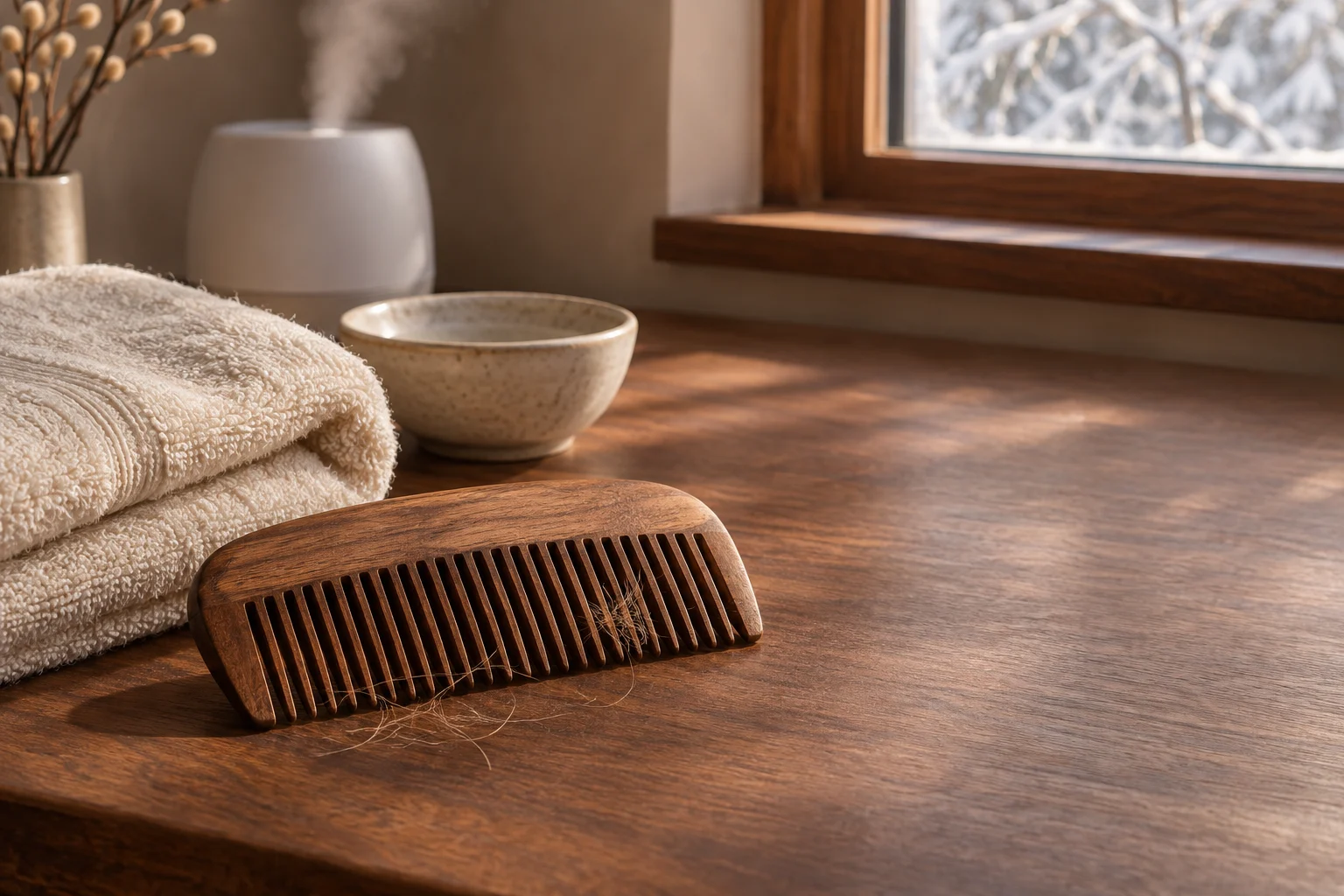
Plastic combs can generate noticeable static when they move repeatedly through dry hair. A smooth wooden comb, cellulose-acetate comb, or well-finished metal comb may behave better. The material matters, but the finish matters just as much: rough teeth and molding seams can snag hairs and split ends.
Comb slowly from the ends upward if the beard is tangled. Once knots are released, make a final pass in the direction you want the beard to sit. Avoid rapid repeated strokes, which create more friction. Clean the comb regularly so old balm, skin debris, and dust do not drag through the hair.
See our guide to beard combs and brushes for help matching the tool to beard length. A boar-style brush can distribute oils through a short or medium beard, while a wide-tooth comb is usually kinder to a long, dense beard.
Manage collars and scarves
The most carefully conditioned beard can still flare out after an hour against polyester fleece. Smooth, breathable fabrics generally create less friction than fuzzy synthetic linings. You do not need to replace your winter wardrobe, but you can place a soft cotton layer between the beard and a rough collar, loosen a scarf slightly, or tuck longer hair so it is not constantly dragged back and forth.
When you remove a coat or scarf, do not immediately attack the beard with a dry comb. Dampen your hands lightly, rub in the smallest trace of oil or balm, and press the beard back into shape. That resets flyaways with less friction than repeated brushing.
Improve the room, not just the routine
If indoor air feels dry enough to irritate your nose or skin, a clean humidifier may make the beard more comfortable too. Follow the humidifier manufacturer’s cleaning and water instructions so it does not become a source of mineral dust or microbial growth. Humidity should feel comfortable, not make windows constantly wet or the room clammy.
Keep the beard away from direct blasts of space-heater air. Very hot blow-drying can also worsen dryness. If you use a dryer for shaping, choose low or medium heat, keep it moving, and stop when the beard is dry rather than continuing until it feels hot.
Build a two-minute anti-static routine
In the morning, wet your hands and smooth the beard to restore a little flexibility. Apply a conservative amount of oil, then comb once to distribute it. Add a touch of balm only where the beard rubs on clothing or where flyaways are most visible. Before leaving, press the beard into its natural shape instead of over-brushing it.
At night, check the ends for knots and remove them gently. A smooth pillowcase and regular laundering can reduce overnight friction and product buildup. Trim visibly split or damaged ends rather than coating them indefinitely. Our beard trimming guide covers how to clean up the outline without shortening healthy growth unnecessarily.
What not to do
Do not spray household anti-static products, laundry products, or hair products not intended for facial use onto the beard. Do not run dryer sheets over facial hair. These products can contact the lips and skin and may contain fragrances or ingredients that are irritating in that location.
Do not use water alone as a long-lasting fix. Water can settle static briefly, but repeated wetting without conditioning may leave the hair dry again once it evaporates. Pair a little moisture with a beard-appropriate conditioning product.
Static is usually manageable with a gentler wash, damp-beard conditioning, a smooth comb, and less contact with rough synthetic fabric. Make one change at a time for several days. That approach reveals whether the biggest cause is dry air, an aggressive cleansing routine, a tool, or winter clothing—and keeps the solution simple enough to repeat.