

Reviewed and updated: October 2, 2026
The direct answer
There is no grooming rule that requires a mustache. The style has appeared in many cultures and can range from a short chin curtain to a full beard with a clean upper lip. What makes it work is visual balance: the beard should have a clear outline, the upper lip should look deliberately shaved, and the sideburns and neckline should support the same level of polish.
Removing the mustache opens the center of the face and puts more attention on the jaw and chin. A longer chin section can add apparent length to a round face, while fuller sides may balance a narrow face. Dense growth gives more shaping options, but patchier growth can also suit a shorter, cleaner design.
What changes the result
Small differences in hair pattern, skin type, tools, and maintenance can change the best approach. Use these factors as a decision guide rather than a rigid checklist.
- Choose a beard length that matches the density you actually have rather than copying a photograph with different growth.
- Keep the upper-lip area consistently clean so the missing mustache reads as a choice instead of an unfinished trim.
- Define the cheek and neckline conservatively; taking either line too high can make the beard look narrow.
- Check the style from the front and both profiles because balance around the mouth is easier to judge from several angles.
Take photographs or brief notes when testing a new routine. A record makes it easier to tell whether the change truly improves comfort and appearance instead of relying on the first few minutes after grooming.
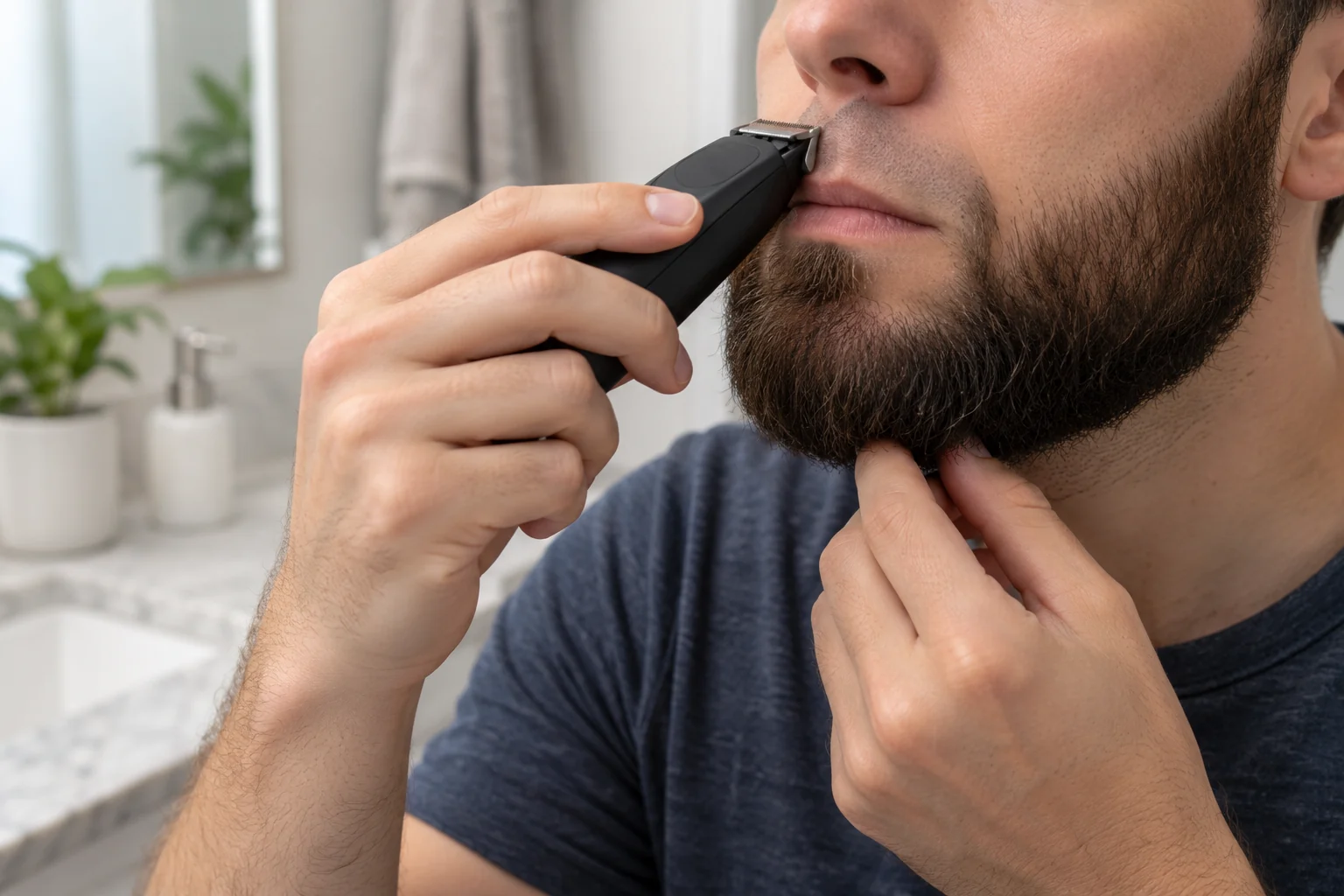
A practical step-by-step routine
- Wash the beard and face with a gentle cleanser, then dry completely before trimming. This creates a consistent starting point and reduces avoidable irritation.
- Set the main beard length first with a guarded trimmer and use several light passes rather than pressing hard. Use a light touch and stop if the skin or area becomes less comfortable.
- Remove upper-lip hair with the method your skin tolerates best, shaving in the direction of growth. The aim is a repeatable routine, not the most aggressive result in one session.
- Blend the corners beside the mouth so there is a clean transition into the beard. Pause to inspect the result in ordinary light before making another change.
- Finish with a small amount of suitable moisturizer or beard conditioner and comb the beard into place. Clean, dry, and store tools or devices according to their instructions when finished.
Change one part of the routine at a time. That makes it easier to identify the cause of dryness, bumps, buildup, uneven trimming, or another unwanted result. Consistency also protects against the cycle of overcorrecting one day and trying to repair it the next.
Common mistakes and better adjustments
The most common problem is treating the mustache area and the beard as two unrelated zones. A razor-clean lip beside an overgrown mouth corner creates a harsh step. Another mistake is chasing symmetry until the beard becomes smaller at every trim. Correct only obvious outliers, pause, and reassess in normal lighting.
Marketing often turns a modest grooming benefit into a biological promise. Separate appearance, softness, hold, and ease of trimming from claims about changing follicles or permanently altering growth. A realistic goal is easier to evaluate and maintain.
When to get professional help
Persistent bumps, burning, scaly patches, or pus-filled spots need more than a closer shave. Let irritated skin recover and consider a dermatologist if the problem continues. Sudden patchy loss, especially with smooth round areas, also deserves evaluation rather than cosmetic camouflage.
Stop a new product or technique when it causes worsening discomfort. Photograph a reaction in clear light and keep the ingredient list or device information. Those details can help a dermatologist or other clinician distinguish irritation, allergy, infection, ingrown hair, and an unrelated condition.
Frequently asked questions
Will it make my face look longer?
It can, especially when the chin is left slightly longer than the sides. The effect depends on face shape and beard density. The practical answer should be adjusted when skin comfort or growth pattern points in another direction.
How often should I shave the lip?
Many people need a light cleanup every one to three days. Use the interval that keeps the boundary clear without repeatedly irritating the skin. The practical answer should be adjusted when skin comfort or growth pattern points in another direction.
Can I keep stubble on the upper lip?
Yes, but the result reads more like mixed stubble than a true beard-without-mustache style. Keep the contrast consistent. The practical answer should be adjusted when skin comfort or growth pattern points in another direction.
Does the style work with gray hair?
Yes. Consistent shaping usually matters more than color, and natural gray can make the outline look especially defined. The practical answer should be adjusted when skin comfort or growth pattern points in another direction.
How to evaluate your result
Give the approach enough time to observe comfort, function, and any delayed irritation, but do not continue through worsening symptoms. Compare the result with a simple baseline: what you could do before, what changed afterward, and how long that change lasted.
A useful routine is repeatable and proportionate. It should not require increasing intensity, hiding side effects, or accepting claims that cannot be measured. When the outcome is unclear, simplify the routine and ask a qualified professional for guidance.
A final check before you finish
Step away for a few minutes, then look again in ordinary light. Check comfort first, followed by overall balance and only then small details. Clean the tools you used, note any product that touched the skin, and avoid making another major change on the same day. This pause helps prevent a minor imperfection from turning into irritation or an uneven result. A routine that remains comfortable and presentable between sessions is more useful than one that looks perfect only immediately after grooming.
Building a routine you can maintain
Start with the least complicated version of the routine and keep it consistent for several grooming sessions. Use clean tools, work in good light, and avoid changing the product, trimming method, and schedule all at once. When several variables change together, it becomes difficult to know what improved the result or caused irritation.
Pay attention to the skin as closely as the hair. Redness, tightness, persistent itching, tender bumps, and flaking are signals to reduce friction or reconsider a product. A polished beard cannot compensate for uncomfortable skin underneath it. Gentle cleansing, careful drying, and modest amounts of product are usually easier to manage than repeated deep cleaning or heavy layering.
Review the result at normal conversational distance as well as close up. Small differences that look dramatic in a magnifying mirror may be invisible in daily life. Set a stopping point before trimming and allow the hair to settle after washing. If a change does not improve comfort, shape, or ease of maintenance, return to the simpler routine instead of adding another corrective step.
Sources and review notes
Claims are limited to the evidence and grooming guidance cited here.