

Reviewed and updated: October 2, 2026
The direct answer
Pomade is a styling category, not one ingredient. Water-based gels, waxy products, oil-heavy traditional pomades, clays, and pastes behave differently. Most problems come from a mismatch between formula, skin type, hairstyle, and wash routine. A product that works well on dry coarse hair may feel greasy or clogging on an acne-prone scalp.
Hair outside the scalp is not living tissue, but it can become dry or break through friction, heat, or aggressive handling. The scalp and hairline are living skin. Oil-rich styling products can move onto the forehead, temples, neck, pillowcase, or hat and contribute to acne cosmetica in susceptible people.
What changes the result
Small differences in hair pattern, skin type, tools, and maintenance can change the best approach. Use these factors as a decision guide rather than a rigid checklist.
- Choose hold and finish based on hair type instead of assuming the strongest product is best.
- Look for non-comedogenic or oil-free language when hairline breakouts are a concern.
- Avoid fragranced formulas if the scalp regularly stings, itches, or flakes after styling.
- Consider how readily the product washes out before layering it day after day.
Take photographs or brief notes when testing a new routine. A record makes it easier to tell whether the change truly improves comfort and appearance instead of relying on the first few minutes after grooming.
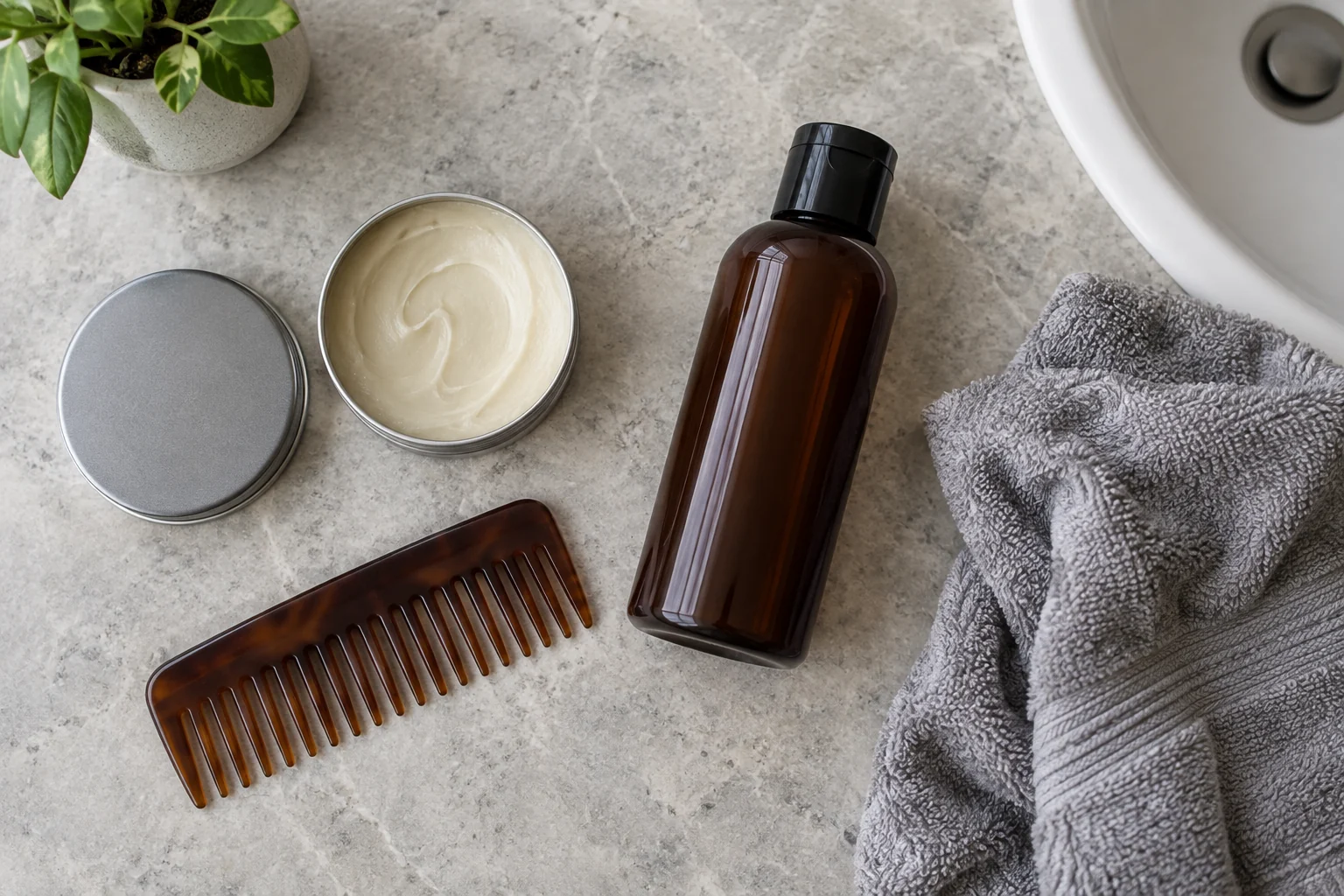
A practical step-by-step routine
- Start with clean or appropriately refreshed hair and dry it to the finish the formula expects. This creates a consistent starting point and reduces avoidable irritation.
- Warm a pea-sized amount between palms before distributing it through the hair. Use a light touch and stop if the skin or area becomes less comfortable.
- Apply from the back toward the front so the hairline does not receive the heaviest deposit. The aim is a repeatable routine, not the most aggressive result in one session.
- Add only what is needed for hold and avoid repeated hard combing once the style is set. Pause to inspect the result in ordinary light before making another change.
- Wash hands, clean combs, and launder pillowcases and hats that collect residue. Clean, dry, and store tools or devices according to their instructions when finished.
Change one part of the routine at a time. That makes it easier to identify the cause of dryness, bumps, buildup, uneven trimming, or another unwanted result. Consistency also protects against the cycle of overcorrecting one day and trying to repair it the next.
Common mistakes and better adjustments
Adding fresh pomade over several days of buildup can make washing harsher and increase transfer to skin. Scraping the scalp with fingernails or using very hot water can worsen irritation. If a product causes bumps, do not keep using it while adding stronger acne treatments without first removing the likely trigger.
Marketing often turns a modest grooming benefit into a biological promise. Separate appearance, softness, hold, and ease of trimming from claims about changing follicles or permanently altering growth. A realistic goal is easier to evaluate and maintain.
When to get professional help
Stop a product for burning, swelling, hives, or weeping skin. Persistent hairline acne, scalp pain, thick scale, patchy hair loss, or raised bumps at the back of the neck deserves dermatology care. Bring the ingredient list or product container to the visit.
Stop a new product or technique when it causes worsening discomfort. Photograph a reaction in clear light and keep the ingredient list or device information. Those details can help a dermatologist or other clinician distinguish irritation, allergy, infection, ingrown hair, and an unrelated condition.
Frequently asked questions
Is water-based pomade always safer?
No. It may wash out more easily, but fragrance, preservatives, or other ingredients can still irritate. The practical answer should be adjusted when skin comfort or growth pattern points in another direction.
Does pomade cause baldness?
Pomade is not a usual cause of pattern hair loss, but rough styling and scalp disease can contribute to breakage or shedding. The practical answer should be adjusted when skin comfort or growth pattern points in another direction.
How often should it be washed out?
Use scalp comfort and residue as guides; heavy products generally need more complete and frequent cleansing. The practical answer should be adjusted when skin comfort or growth pattern points in another direction.
Can pomade cause forehead acne?
Yes. Oils and residue can clog pores along the hairline in susceptible people. The practical answer should be adjusted when skin comfort or growth pattern points in another direction.
How to evaluate your result
Give the approach enough time to observe comfort, function, and any delayed irritation, but do not continue through worsening symptoms. Compare the result with a simple baseline: what you could do before, what changed afterward, and how long that change lasted.
A useful routine is repeatable and proportionate. It should not require increasing intensity, hiding side effects, or accepting claims that cannot be measured. When the outcome is unclear, simplify the routine and ask a qualified professional for guidance.
A final check before you finish
Step away for a few minutes, then look again in ordinary light. Check comfort first, followed by overall balance and only then small details. Clean the tools you used, note any product that touched the skin, and avoid making another major change on the same day. This pause helps prevent a minor imperfection from turning into irritation or an uneven result. A routine that remains comfortable and presentable between sessions is more useful than one that looks perfect only immediately after grooming.
Building a routine you can maintain
Start with the least complicated version of the routine and keep it consistent for several grooming sessions. Use clean tools, work in good light, and avoid changing the product, trimming method, and schedule all at once. When several variables change together, it becomes difficult to know what improved the result or caused irritation.
Pay attention to the skin as closely as the hair. Redness, tightness, persistent itching, tender bumps, and flaking are signals to reduce friction or reconsider a product. A polished beard cannot compensate for uncomfortable skin underneath it. Gentle cleansing, careful drying, and modest amounts of product are usually easier to manage than repeated deep cleaning or heavy layering.
Review the result at normal conversational distance as well as close up. Small differences that look dramatic in a magnifying mirror may be invisible in daily life. Set a stopping point before trimming and allow the hair to settle after washing. If a change does not improve comfort, shape, or ease of maintenance, return to the simpler routine instead of adding another corrective step.
Sources and review notes
- American Academy of Dermatology: hair products and acne
- American Academy of Dermatology: styling products and neck irritation
Claims are limited to the evidence and grooming guidance cited here.