

Reviewed and updated: October 3, 2026
The direct answer
Appearance is the main advantage for many people: facial hair can alter visual proportions and offer styles from stubble to full length. Avoiding a daily blade may reduce shaving irritation. The tradeoff is that hair and the skin under it still encounter sweat, oil, food, pollen, and products.
Longer beards take more drying and detangling. Borders still need trimming if a defined shape is desired. In jobs requiring a tight-fitting respirator, facial hair can break the seal. Personal relationships, sensory preference, religious practice, and workplace rules can all matter.
What to consider before choosing
Choose a length that matches coverage and maintenance time. Keep the routine simple: gentle washing, complete rinsing, drying, moisturizing when needed, and clean tools. Check the hidden skin periodically and change the style if it repeatedly causes discomfort.
Growth pattern and skin tolerance matter more than a trend. Start conservatively, observe the result in ordinary light, and preserve enough length to make a correction later. Comfort is part of a successful style, not an optional extra.
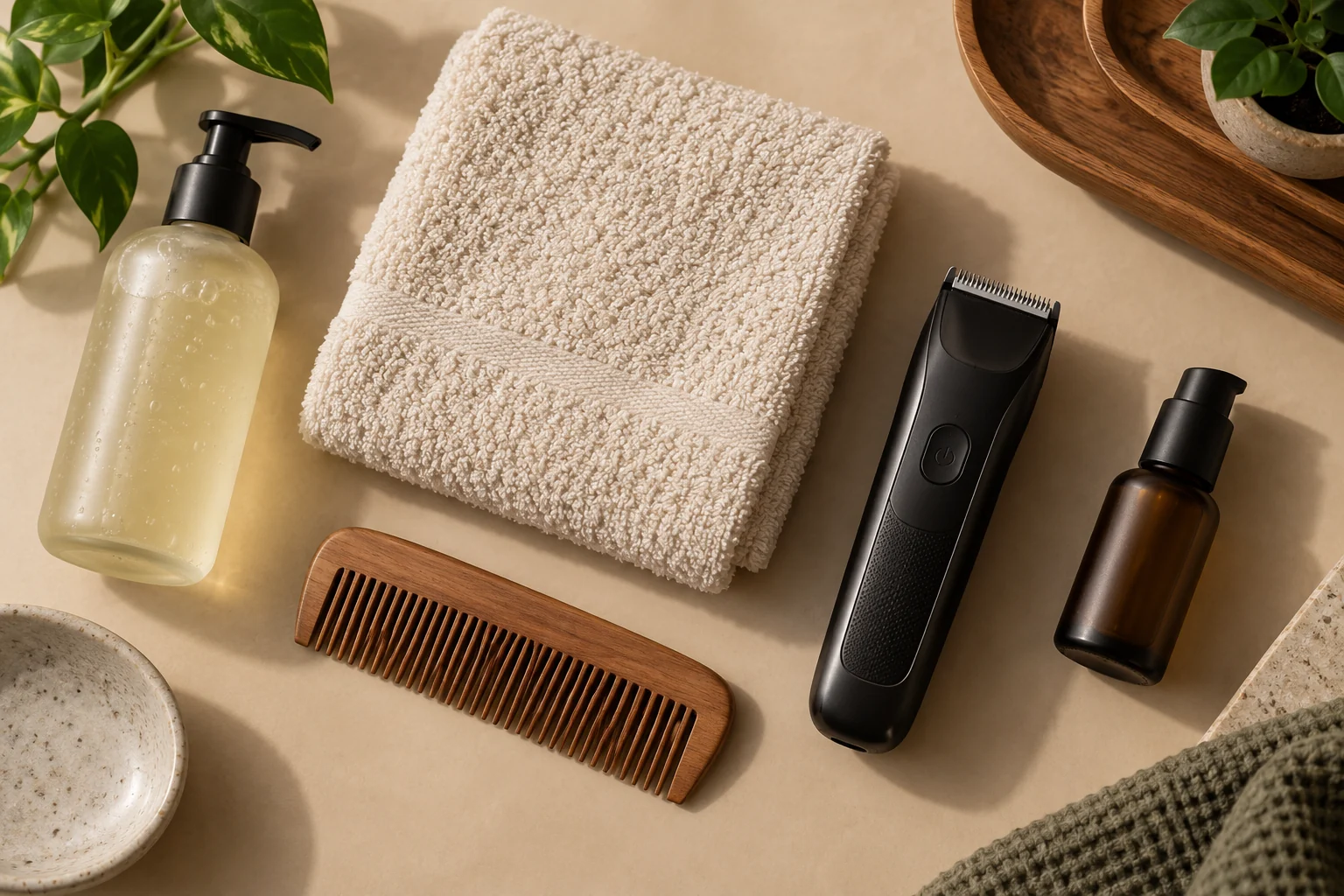
A practical routine
- Rinse after messy work or meals. Work slowly, check comfort, and stop before irritation or overcorrection.
- Wash according to skin needs. Work slowly, check comfort, and stop before irritation or overcorrection.
- Dry without rubbing. Work slowly, check comfort, and stop before irritation or overcorrection.
- Comb from the ends. Work slowly, check comfort, and stop before irritation or overcorrection.
- Trim with a guard. Work slowly, check comfort, and stop before irritation or overcorrection.
- Keep the mustache clear of the mouth. Work slowly, check comfort, and stop before irritation or overcorrection.
- And wash pillowcases and tools regularly.. Work slowly, check comfort, and stop before irritation or overcorrection.
Take a short pause after the first pass. Hair settles after washing and combing, and small differences often become less noticeable. If another adjustment is needed, make the smallest change that solves the visible problem.
Common mistakes
Neglecting the skin, using heavily fragranced layers, sharing tools, and trimming inflamed areas can lead to avoidable problems. A beard should not be used to hide an untreated rash or changing lesion.
Marketing can blur cosmetic benefits with biological claims. Softness, shine, hold, and an even outline are measurable grooming results. Claims about creating follicles, permanently changing growth, or curing skin disease need much stronger evidence.
How to judge the result
Use comfort, skin condition, evenness, and ease of maintenance as the main measures. Inspect the beard in daylight from the front and both profiles. A magnifying mirror can turn normal variation into a problem, so make final decisions at conversational distance.
Change only one tool, product, or trimming habit at a time and keep a short note for two or three weeks. This makes delayed irritation, buildup, and breakage easier to trace. A good routine remains manageable between grooming sessions instead of requiring constant correction.
Skin care under the beard
Facial hair does not replace skin care. Clean the skin with fingertips rather than aggressive scrubbing, rinse thoroughly, and dry without rubbing. Choose fragrance-free or non-comedogenic products when sensitivity or acne is a concern. Keep combs, guards, scissors, and pillowcases clean.
Check hidden skin for redness, scale, tender bumps, and changing spots. Stop any new product that burns or worsens a rash. Natural ingredients can still irritate or trigger allergy, and adding several products at once makes the cause harder to identify.
When to ask for help
Persistent itching, painful bumps, pus, spreading redness, unusual hair loss, or a changing mole warrants medical advice. Follow respirator policies where a seal is required.
Photograph a reaction in clear light and keep the product ingredient list or tool details. That information can help a dermatologist distinguish irritation, allergy, acne, ingrown hair, infection, and unrelated skin conditions.
Frequently asked questions
Are beards dirty?
A maintained beard is not inherently dirty; hygiene depends on habits and exposure. Adjust the routine when your skin or growth pattern responds differently.
Can beards cause dandruff?
Flaking may come from dry skin or seborrheic dermatitis and may need targeted care. Adjust the routine when your skin or growth pattern responds differently.
Are beards hotter?
Some people notice warmth, though length, weather, and activity affect comfort. Adjust the routine when your skin or growth pattern responds differently.
Is a short beard easier?
Usually, but short styles may require more frequent border trimming. Adjust the routine when your skin or growth pattern responds differently.
Final review before you finish
Step away for a few minutes and reassess the result in ordinary conditions. Check comfort first, then function or overall shape, and only then minor details. A repeatable approach is more useful than an aggressive one that creates a new problem.
Keep the routine simple enough to follow consistently. Record what you used, how long the session took, and any delayed change. When the outcome is unclear, return to the gentler baseline and seek qualified guidance instead of adding intensity or more products.
Keeping the routine consistent
Consistency makes a grooming result easier to evaluate. Use the same guard, lighting, and general order for several sessions before deciding that a method does not work. Clean tools cut more predictably, and a written guard setting prevents the common mistake of guessing after the attachment has been removed.
Plan around the rate at which your own hair grows. Fast-growing borders may need light cleanup before the main beard needs shortening. Separate those jobs so a quick neckline or mustache trim does not turn into an unnecessary full reset. Leave enough time to work without rushing, especially when learning a new razor or changing the outline.
Products should solve a defined problem such as dryness, tangling, or light hold. If a product adds shine but also creates itching, buildup, or breakouts, it is not improving the routine. Reduce the amount or stop it rather than covering the reaction with another product.
What progress should look like
Progress usually appears as fewer irritated areas, more predictable trimming, easier combing, and a shape that still looks intentional several days later. It does not require perfect symmetry or a different biological growth pattern. Natural differences in density and direction are visible in nearly every beard when examined closely.
Review photographs monthly rather than immediately after every trim. That interval shows whether length, outline, and skin comfort are moving in the desired direction. If the routine keeps producing the same problem, simplify it: use fewer passes, fewer products, a longer guard, or a more natural border.
Sources and review notes
Claims are limited to the evidence and grooming guidance cited here.